

If you want straighter teeth without metal braces, you may wonder if clear aligners can do the job. SureSmile clear aligners offer a modern option for orthodontic treatment that fits into your daily routine.
SureSmile clear aligners are custom-made, clear plastic trays that gently move your teeth into better positions over time.
Your dentist or orthodontist uses digital scans and 3D planning to map out your teeth-straightening plan, then creates a series of aligners that you switch out as your teeth shift.
You wear the aligners most of the day, remove them to eat and brush, and visit your provider to track progress. As you move through each set, you see steady changes that bring you closer to a straighter, healthier smile.
Key Takeaways
- SureSmile uses custom clear aligners to straighten your teeth step by step.
- Digital scans and treatment planning guide your orthodontic care.
- You wear removable trays daily to support steady teeth movement.
Table of Content
- Understanding SureSmile Clear Aligners
- The SureSmile Treatment Journey
- Aligner Fabrication and Wear Process
- Tools, Technology, and Support for Success
- Cost, Comparisons, and Final Results
- Frequently Asked Questions
Understanding SureSmile Clear Aligners
SureSmile clear aligners use digital planning and custom trays to move your teeth in small, controlled steps. They treat common orthodontic issues while giving you a removable option instead of metal brackets and wires.
What Makes SureSmile Different
SureSmile clear aligners rely on detailed digital scans of your mouth. Your dentist or orthodontist uses a 3D scan to map your teeth and plan each stage of movement.
Each set of clear aligners is custom made to fit your teeth. You wear one set for about one to two weeks, then switch to the next set. Each new tray gently shifts your teeth closer to their planned position.
Your doctor directs the treatment from start to finish. Your provider creates a personal treatment plan and checks your progress during regular visits.
You remove the aligners to eat, drink, brush, and floss. This makes daily care easier than with fixed appliances.
Types of Orthodontic Issues Treated
SureSmile clear aligners treat many common orthodontic issues. If you have crooked teeth, crowded teeth, or small gaps, your provider can often correct them with a series of trays.
They can also help with certain bite problems, such as:
- Overbite
- Underbite
- Crossbite
- Mild to moderate misaligned teeth
Treatment works best for mild to moderate cases. Severe jaw problems may still require traditional braces or other orthodontic care.
Clear aligners move teeth in small steps. Each tray applies light pressure to specific teeth. Over time, this pressure guides your teeth into better alignment and improves how your upper and lower teeth fit together.
Your dentist will review your case to confirm if SureSmile fits your needs.
Comparison to Traditional Braces
Traditional braces use metal brackets and wires that stay on your teeth until treatment ends. SureSmile clear aligners use smooth plastic trays that you can remove.
Here is a simple comparison:
| Feature | SureSmile Clear Aligners | Traditional Braces |
| Appearance | Clear and less visible | Metal brackets and wires |
| Removal | Removable | Fixed in place |
| Cleaning | Brush and floss normally | Special tools needed |
| Food limits | Few limits | Many sticky or hard foods restricted |
You must wear clear aligners 20 to 22 hours a day for them to work well. With braces, you do not need to remember to put them back in, but cleaning around brackets takes more effort.
Both options can straighten teeth. Your choice depends on your orthodontic issues, lifestyle, and how much structure you want built into your treatment.
Take the first step toward a healthier, more confident smile with custom SureSmile clear aligners.
The SureSmile Treatment Journey
Your treatment starts with a close review of your teeth and ends with custom aligners made just for you. Each step uses digital tools and clear planning so you know what to expect.
Initial Consultation and Candidacy
You begin with an initial consultation at a dental office that offers SureSmile. Your orthodontist or general dentist will ask about your goals, such as fixing crowding, gaps, or bite issues.
They will check your teeth, gums, and jaw. This exam helps them decide if clear aligners fit your needs or if another type of orthodontic treatment would work better.
In many offices, you may see a quick preview of how your smile could look after treatment. Doctors review your goals, take photos, and discuss whether you are a good candidate.
You should feel free to ask about treatment time, cost, and daily wear. Most people need to wear aligners 20 to 22 hours a day.
Digital Scanning and 3D Imaging
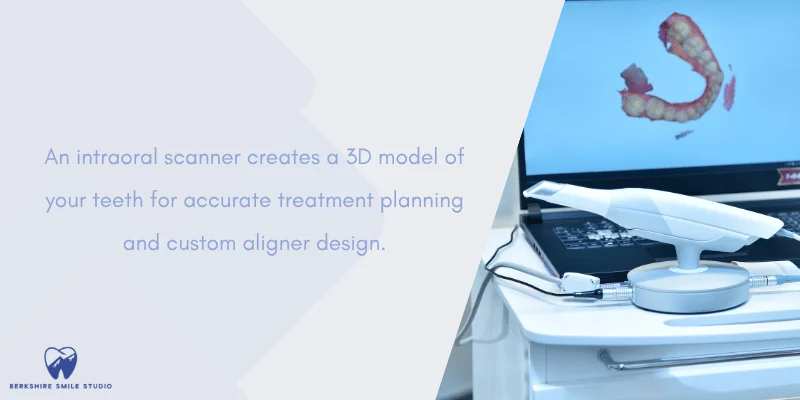
If you move forward, your provider will take a digital scan of your teeth. They use an intraoral scanner, a small handheld device that captures detailed images inside your mouth.
Digital scanning replaces messy putty molds. The scanner creates a 3D model of your teeth and bite in minutes.
This 3D image shows crowding, spacing, and how your upper and lower teeth meet. It gives your orthodontist a clear view for accurate treatment planning.
The scan also helps design your custom aligners. Because the model is digital, small adjustments can be made before production begins. This step improves fit and comfort.
Personalized Treatment Planning
After scanning, your provider builds a personalized treatment plan. This plan maps out how each aligner will move your teeth step by step.
Your doctor sends the digital files to the SureSmile lab. There, technicians use advanced software to create a series of custom aligners based on your exact tooth shape and movement goals.
Each set of aligners applies gentle pressure to guide specific teeth into better positions. You switch to a new set every one to two weeks, as directed.
Your orthodontist tracks your progress with regular checkups. If needed, they can adjust your treatment plan to keep your teeth moving as planned.
This clear and guided process keeps you informed and involved from start to finish.
Aligner Fabrication and Wear Process
SureSmile aligners use digital scans and detailed treatment planning to create custom aligners that move your teeth in small, controlled steps.
You wear each set as directed, and the steady pressure guides precise tooth movement over time.
How Custom Aligners Are Made
Your dentist starts clear aligner treatment by taking digital scans and photos of your teeth. These images replace messy impressions and capture small details of your bite.
Using this data, your dentist creates a step‑by‑step plan that maps out precise tooth movement. The plan goes to a digital lab, where technicians design your custom aligners to match each stage.
Your doctor prescribes a personal treatment plan and sends it to the SureSmile digital lab for fabrication.
Each aligner gets made from smooth, BPA-free plastic. The material is clear and shaped to fit your teeth closely.
You receive a series of trays. Each tray represents a small shift in tooth position and builds on the last one.
Wearing Aligners and Tooth Movement

You wear your aligners most of the day, usually 20 to 22 hours. You remove them only to eat, drink anything other than water, and brush or floss.
Each set gently pushes your teeth toward the next planned position. As explained in this overview of how SureSmile clear aligners work, the trays apply light, steady force instead of using brackets and wires.
You switch to a new set every one to two weeks, based on your dentist’s instructions. The change may feel tight at first. That pressure means the aligner is doing its job.
Some patients use chewies, small soft cylinders, to help seat the trays fully. Biting on chewies helps the aligner fit snugly against your teeth, which supports precise tooth movement.
Regular exams keep your clear aligner treatment on track. Your dentist checks your progress and adjusts the plan if needed.
Comfort and Fit Features
SureSmile aligners focus on a comfortable fit. The trays use smooth edges and thin material to reduce rubbing against your gums and cheeks.
Because they are clear, most people will not notice them during normal conversation. This makes them a popular choice for teens and adults.
The BPA-free plastic feels lightweight but strong. It holds its shape while applying controlled pressure to your teeth.
You also receive a small patient kit with tools to help you care for your aligners. These items may include a case, chewies, and cleaning supplies.
When you wear your aligners as directed and keep them clean, you support steady progress and protect your oral health throughout treatment.
Tools, Technology, and Support for Success
SureSmile treatment includes tools that help your aligners fit well and stay clean. You also get digital tracking and regular checkups to keep your plan on schedule.
SureSmile VPro and Faster Treatment
You may use SureSmile VPro, a small handheld device that sends gentle high‑frequency vibrations through your aligners. You place it between your teeth and bite down for about five minutes a day.
This vibration can help your aligners seat fully against your teeth. A better fit may reduce pressure and soreness. Some studies suggest it may support a faster treatment time when used as directed.
The device connects to the SureSmile VPro app, which lets you:
- Track daily use
- Get reminders to switch trays
- Monitor battery life
- Share progress with your provider
You use VPro at home, but your dentist still checks your progress during regular checkups. It supports your plan; it does not replace office visits.
Accessories: Cases, Chewies, and Cleaners
Your provider may give you a SureSmile Patient Kit at the start of treatment. This kit includes tools that help you protect and maintain your aligners.
Most kits contain:
- An appliance case
- Chewies™
- Retainer Brite® cleaning tablets
You store your aligners in the case whenever you remove them. This helps prevent loss or damage.
Chewies are small, soft cylinders. You bite down on them to help seat your aligners fully. A snug fit improves how the trays move your teeth.
Retainer Brite tablets help clean your aligners. You dissolve a tablet in water and soak your trays to remove buildup and odor. Clean aligners look clearer and feel fresher in your mouth.
Progress Monitoring and Provider Support
SureSmile uses digital planning software to map your tooth movement step by step. Your provider reviews your case on a browser‑based platform, which allows them to check plans from the office or another location.
You will still attend regular checkups. During these visits, your dentist checks how your teeth respond and confirms that you can move to the next set of trays.
At each appointment, your provider may:
- Compare your current smile to the digital plan
- Make small adjustments if needed
- Answer questions about wear time or care
Clear aligners work best when you follow instructions and keep your visits. With the right tools and steady monitoring, you stay on track toward your planned results.
Cost, Comparisons, and Final Results
You should know what you may pay, how SureSmile compares to other aligners, and what happens after treatment ends. These details help you plan your budget and protect your long-term oral health.
SureSmile Cost and Insurance Options
The SureSmile cost depends on how complex your case is and how long treatment lasts. Most patients pay between $3,000 and $6,000.
Many dental offices offer payment plans. You may pay a down payment and then make monthly payments during treatment.
Your dental insurance may cover part of the cost of SureSmile, especially if your plan includes orthodontic benefits. Some plans cover a flat amount, such as $1,000 to $2,000, rather than a percentage.
You should schedule a consultation to get an exact quote. Your dentist will review your scans and explain your total cost before you commit.
SureSmile vs. Other Clear Aligners
SureSmile and Invisalign both use clear plastic trays to move your teeth. Both require in-office visits and custom treatment plans.
In many cases, SureSmile costs less than Invisalign. Invisalign often ranges from $3,500 to $8,500, depending on treatment time and case difficulty.
SureSmile treatment may average about 6 months for mild cases. Invisalign often averages closer to 12 months, though this varies.
At-home brands like ALIGNERCO and NewSmile cost less. Some plans start under $2,000. These systems use remote monitoring instead of regular office visits.
Lower cost can mean fewer in-person checkups. If your case is complex, in-office systems like SureSmile may better support your oral health and tooth movement tracking.
Completion and the Retainer Phase
When you finish your last aligner, you enter the retainer phase. This step protects your results.
Your dentist will give you retainers, often called SureSmile retainers, to hold your teeth in place. Teeth can shift back if you stop wearing them.
Most patients wear retainers full time for several weeks. After that, you usually switch to nighttime wear.
Retainers support long-term oral health by keeping your bite stable. If you skip this step, you may need more treatment later.
Your dentist will check your final results and make sure your teeth align properly. Regular follow-up visits help keep your smile on track for years.
Curious about how SureSmile clear aligners work? Schedule your consultation in Pittsfield, MA to see if they’re right for your smile.
Frequently Asked Questions
You likely want clear answers about cost, comfort, timing, and long‑term results. These points address how SureSmile compares to other brands, what real patients report, and what you can expect during and after treatment.
How is SureSmile different from Invisalign?
SureSmile and Invisalign both use clear plastic trays to move your teeth. Your dentist creates a digital plan and sends it to a lab that makes your custom aligners.
SureSmile is only available through a dental office, and your dentist directs your care from start to finish.
The materials and software differ by brand, but both systems rely on a series of trays that shift your teeth in small steps. The right choice often depends on your dentist’s training, your budget, and your specific tooth movement needs.
What do SureSmile aligners reviews usually say about comfort and results?
Many reviews say the trays feel smooth and fit snugly over your teeth. You may feel pressure for a few days when you switch to a new set, but that pressure usually fades.
Patients often mention that the aligners look discreet in photos and during daily activities. You remove them to eat and brush, which makes them easier to manage than braces for many adults.
Some reviews also note steady improvement over several months, especially for mild to moderate crowding and spacing.
Are there common complaints in SureSmile bad reviews, and what causes them?
Some negative reviews mention discomfort during the first week. This often happens because your teeth are actively shifting.
Others report delays if they forget to wear the trays for the recommended 20 to 22 hours per day. Skipping wear time can slow progress and lead to extra aligners.
You can lower the risk of problems by following your dentist’s instructions and attending regular checkups.
What does the SureSmile before and after timeline typically look like?
Your dentist starts with photos and a digital scan of your teeth. The official SureSmile aligner treatment process shows how your doctor designs and approves a custom plan before you receive your trays.
Many people complete treatment in several months, while others may need a year or more. The exact timeline depends on how much your teeth need to move.
You usually switch to a new set of aligners every one to two weeks. Your dentist checks your progress to keep your teeth on track.
Does SureSmile change your face shape?
SureSmile moves your teeth, not your jawbones. It can improve how your lips rest and how your smile looks, but it does not reshape your face structure.
If you have severe bite issues, your dentist may discuss other treatments. Clear aligners focus on tooth alignment and minor bite correction.
Do you need to wear a retainer after finishing SureSmile treatment?
Yes. After your teeth reach their final position, you need a retainer to hold them there.
Teeth can shift back over time if you stop wearing a retainer. Many dentists recommend wearing it full time at first, then at night long term.
SureSmile offers retainers made to fit your new smile so you can protect the results you worked for.