


Finding the right dentist for dental implants can feel overwhelming when you have so many options to choose from. You want someone who is experienced, trustworthy, and can give you the results you deserve.
The good news is that with the right approach, you can find qualified implant specialists in your area.
Start by looking for the best implant dentist near me who specializes in implant procedures, check their credentials and experience, read patient reviews, and schedule consultations to compare your options.
Different types of dental professionals can place implants, including oral surgeons, periodontists, and prosthodontists. Each brings different training and expertise to the table.
Your choice of dentist will affect both your experience and your results. Dental implant procedures have success rates above 95% when performed by qualified professionals.
This guide will walk you through the steps to find a skilled implant dentist who meets your needs and budget.
Key Takeaways
- Research multiple implant dentists in your area and compare their credentials, experience, and patient reviews before making a decision
- Understanding the different types of dental professionals who perform implants helps you choose the right specialist for your situation
- Schedule consultations with several providers to discuss costs, treatment plans, and financing options before committing to treatment
Table of Content
- Understanding Dental Implants and Tooth Replacement
- Dental Professionals Involved in Implant Dentistry
- How to Search for Reputable Implant Dentists Near You
- What to Expect During the Dental Implant Process
- Comparing Costs and Alternatives for Implants
- Frequently Asked Questions
Understanding Dental Implants and Tooth Replacement
Dental implants serve as artificial tooth roots that provide a permanent solution for missing teeth. They offer more stability and oral health benefits compared to traditional options like dentures or bridges.
What Are Dental Implants?
A dental implant is a small titanium post that your dentist surgically places into your jawbone. The implant acts like a natural tooth root and provides a strong foundation for replacement teeth.
The implant consists of three main parts. The titanium post goes into your jawbone. An abutment connects to the top of the post. A dental crown sits on top and looks like your natural tooth.
Titanium works well because your jawbone actually grows around it over time. This process makes the implant become part of your body. The whole implant becomes stable and won’t slip or move like dentures can.
Mini dental implants are smaller versions that work for people with weaker jawbones. They need less bone to stay in place.
Types of Tooth Replacement Options
You have several choices when it comes to replacing missing teeth. Each option works differently and costs a different amount.
Single Dental Implants replace one tooth at a time. Your dentist places one implant for each missing tooth. This option costs between $1,500 and $6,000 per tooth.
Dental Bridge uses your existing teeth as anchors. The bridge fills the gap where teeth are missing. You don’t need surgery, but your dentist must grind down healthy teeth.
Full Dentures are removable false teeth that replace all your teeth. They’re the least expensive option but can slip when you eat or talk.
All-on-4 is a newer option where four to six implants support a full arch of teeth. This costs around $15,000 per arch instead of $40,000 for individual implants.
Implant-Retained Dentures clip onto implant abutments in your jawbone. They’re more stable than regular dentures but cost less than individual implants.
Benefits for Oral Health
Dental implants protect your oral health in ways other tooth replacement options can’t match. They help keep your jawbone strong and healthy.
When you lose a tooth, your jawbone starts to break down in that area. Implants stimulate your jawbone just like natural tooth roots do. This prevents bone loss and keeps your face shape normal.
Implants don’t affect your other teeth. A dental bridge requires grinding down healthy teeth on both sides of the gap. Implants stand alone without touching other teeth.
You can eat normally with implants. They won’t slip or move when you bite into hard foods. You can brush and floss them like regular teeth.
Implants last longer than other options. They can last your whole life with proper care. Dentures and bridges need replacement every 5 to 15 years.
Dental Professionals Involved in Implant Dentistry
Different types of dental specialists handle various aspects of implant dentistry, from the surgical placement to the final restoration. Understanding who does what helps you choose the right professional for your specific needs.

Prosthodontist vs. General Dentist
A prosthodontist is a dental specialist with advanced training in replacing missing teeth and restoring your smile. They complete three extra years of education beyond dental school focused on prosthodontics.
General dentists can also place and restore dental implants if they have the proper training. Many general dentists take continuing education courses to learn implant procedures.
The key difference is the depth of specialized knowledge.
Prosthodontists handle complex cases involving multiple missing teeth, jaw problems, or cosmetic concerns. They’re experts in creating crowns, bridges, and dentures that attach to implants.
Your general dentist might be perfectly qualified for a single straightforward implant. In more complex situations, a prosthodontist’s additional training is valuable.
Role of the Implant Dentist
An implant dentist specializes in planning and placing dental implants into your jawbone. AAID-credentialed dentists have specific levels of training and experience in implant dentistry.
AAID credentials include:
- Associate Fellow: 1+ years of experience, 300 hours of continuing education
- Fellow: 5+ years of experience, 400 hours of continuing education
- ABOI/ID Diplomate: Substantial experience, 670 hours of continuing education
These dentists assess whether you’re a good candidate for implants. They examine your jawbone density, overall health, and oral condition. They also create your treatment plan and perform the actual implant surgery.
Many implant dentists work with other specialists to complete your care. They might place the implant while another dentist creates the final crown or bridge.
Oral Surgeons and Periodontists
Oral surgeons specialize in surgical procedures involving your mouth, jaw, and face. They handle complex implant cases that require bone grafting or sinus lifts. Their surgical expertise makes them ideal for difficult placements.
Periodontists focus on the gums and bone that support your teeth. They treat gum disease and specialize in the tissues around implants. Since implants need healthy gums and bone, periodontists often place implants themselves.
Both specialists complete several years of training after dental school. They’re skilled at managing surgical complications and healing issues.
If you have bone loss or gum disease, these specialists can prepare your mouth for implants first.
Restorative Dentists and Other Specialists
Restorative dentists create the visible parts of your implant—the crowns, bridges, or dentures that attach to the implant posts. They focus on making your new teeth look natural and function properly.
Your restorative dentist takes impressions and designs your custom restoration. They ensure your bite aligns correctly and your new teeth match your natural ones.
This phase typically starts several months after implant placement.
Some cases involve other specialists too. An orthodontist might straighten your remaining teeth before implant placement.
A general dentist often coordinates care between different specialists to complete your treatment plan smoothly.
How to Search for Reputable Implant Dentists Near You
Finding the right implant dentist requires research into professional credentials, patient experiences, and specialized training.
You can use several effective strategies to identify qualified dentists who specialize in dental implants.
Using Professional Directories
Professional directories help you find dentists who meet specific qualifications in your area.
The American Dental Association’s directory lets you search for ADA member dentists by entering your street address and ZIP code. You can filter results by specialty to find dentists who offer dental implants.
Online platforms like Booking.dentist provide listings of dental clinics with free quotes and consultations. These directories often include details about the dental services each practice offers.
You can compare multiple providers in one place.
Some directories focus specifically on implant specialists. These targeted resources make it easier to find dentists who dedicate their practice to implant procedures.
When you use these tools, look for filters that let you narrow results by location, insurance acceptance, and procedure types.
Evaluating Credentials and Experience
Credentials show a dentist’s commitment to advanced training in implant dentistry. The American Academy of Implant Dentistry offers three credential levels you should understand:
| Credential | Experience | Required Education | Examination |
| Associate Fellow | 1+ years | 300 hours | Oral and written |
| Fellow | 5+ years | 400 hours | Oral and written |
| ABOI/ID Diplomate | Substantial | 670 hours | Oral and written |
Ask potential dentists about their years of experience placing dental implants. Find out how many implant procedures they perform each year.
Dentists who place implants regularly tend to have better success rates than those who only do them occasionally.
Reading Patient Reviews and Testimonials
Patient reviews give you insight into real experiences with a dental practice. You can find reviews on platforms, which include ratings and detailed feedback from actual patients.
Look for patterns in reviews rather than focusing on single comments.
Pay attention to what patients say about pain management, communication style, and treatment results. Reviews that mention successful outcomes and comfortable experiences indicate quality care.
You should also note how practices respond to negative feedback.
Be cautious of practices with only perfect reviews or no reviews at all. A mix of positive reviews with a few constructive comments usually signals authentic feedback. Check multiple review platforms to get a complete picture.
Consulting the American Academy of Implant Dentistry
The American Academy of Implant Dentistry provides a search tool specifically designed to help you find credentialed implant dentists.
AAID-credentialed dentists have demonstrated their commitment to putting your smile, needs, and health first through rigorous training and examination.
AAID cannot make specific recommendations about individual dentists’ skills. However, their credentialing system gives you a starting point for identifying qualified professionals in your area.
What to Expect During the Dental Implant Process
The dental implant process involves multiple stages that take several months to complete. You’ll work with different specialists who will evaluate your oral health, surgically place the implant, and attach your final restoration.
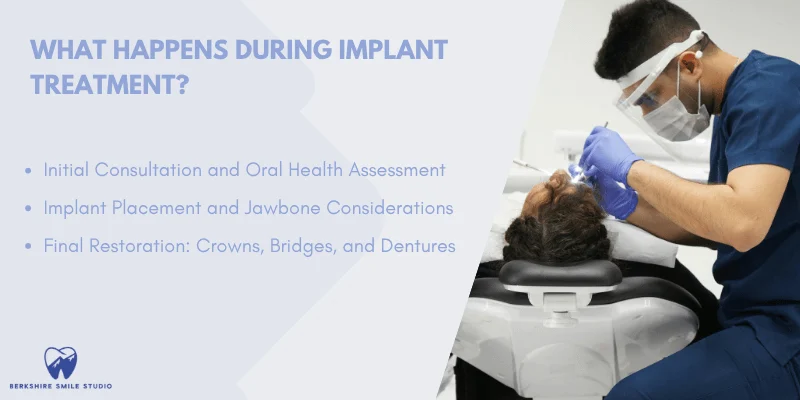
Initial Consultation and Oral Health Assessment
Your first appointment includes a full dental exam where your implant dentist takes X-rays and 3D images of your mouth.
You may meet with several specialists during the planning stage, including a periodontist who treats gums and bones, an oral surgeon who performs the surgery, and a prosthodontist who designs artificial teeth.
During this visit, your dentist reviews your medical history and any medications you take. They check if your jawbone is thick enough to support an implant.
If your bone is too soft or thin, you’ll need a bone graft before the implant can be placed.
Your dental team creates a treatment plan based on how many teeth you need replaced. They’ll discuss anesthesia options like local numbing, sedation, or general anesthesia.
You’ll also learn about the timeline, which can take several months from start to finish.
Implant Placement and Jawbone Considerations
The surgeon makes a cut in your gum to expose the bone and drills holes where the metal post goes. This post acts as your tooth root and sits deep in the jawbone.
You might have a temporary denture placed to fill the gap while you heal.
After placement, osseointegration begins, which means your jawbone grows into and fuses with the implant surface.
This creates a solid base for your new tooth, just like natural roots support real teeth. The process typically takes several months.
Once the bone has fully healed, you’ll need a second minor surgery to attach the abutment. This is the piece that connects the implant to your crown. Your gums then heal for about two weeks before the final restoration.
Final Restoration: Crowns, Bridges, and Dentures
After your gums heal, your dentist makes impressions of your mouth to create your artificial tooth. You can choose between different types of restorations based on your needs.
A dental crown is a single artificial tooth that permanently attaches to one implant. A dental bridge uses implants to support multiple connected teeth.
Dentures can be removable or fixed, with the removable type snapping onto the implant for easy cleaning.
Fixed artificial teeth are permanently screwed or cemented to the implant and can’t be removed for cleaning. Removable options look like conventional dentures with artificial teeth on a metal frame that attaches to your implants.
Your prosthodontist helps you pick the best option for your situation and budget.
Comparing Costs and Alternatives for Implants
Dental implant costs vary widely based on the type of procedure you need and your location. Understanding your options helps you make an informed choice about restoring your smile.
Implant Pricing and Insurance Factors
Dental implants cost between $3,000 and $90,000 depending on what type you choose. A single tooth implant typically runs $3,000 to $6,000. All-on-4 procedures range from $15,000 to $30,000 per arch.
Your location affects pricing significantly. Urban areas usually charge more than rural regions. You can compare dental procedure prices in your area using online tools that show fair market rates.
Most dental insurance plans cover only 10% to 50% of implant costs. Some policies treat implants as cosmetic and offer no coverage at all.
Many dental offices offer payment plans or financing options to make implants more affordable.
Alternatives: Dentures, Bridges, and Veneers
You have several alternatives to dental implants if cost is a concern. Dentures are removable teeth replacements that cost $1,000 to $3,000 for a partial set and $2,500 to $5,000 for full dentures.
They require less upfront investment but need replacement every 5 to 8 years.
A dental bridge fills gaps by anchoring artificial teeth to surrounding natural teeth. Bridges cost $2,000 to $5,000 per tooth and last 10 to 15 years. They work well for replacing one to three consecutive missing teeth.
Veneers only cover the front surface of teeth and don’t replace missing teeth entirely. They cost $1,000 to $2,500 per tooth and improve appearance but don’t restore full function as implants do.
Maintenance and Teeth Whitening Options

Dental implants need the same care as natural teeth. You should brush twice daily and floss once. Professional cleanings every six months help your implants last 25 years or longer.
A dental crown sits on top of your implant and may need replacement every 10 to 15 years. The crown costs $1,000 to $3,000 when replacement becomes necessary.
Teeth whitening works on natural teeth but won’t change the color of your implant crowns. You should whiten your teeth before getting implants so your dentist can match the crown color.
Professional whitening costs $300 to $800 and lasts one to three years with proper care.
Contact our team in Pittsfield, MA to learn if dental implants are the right solution for you.
Frequently Asked Questions
Finding the right implant dentist involves understanding credentials, costs, and what to expect during consultations. These common questions help you make informed decisions about your dental implant treatment.
What should I look for when choosing an implant dentist near me?
You should look for a dentist who specializes in implant procedures, such as a periodontist or oral surgeon. General dentists can place implants, but specialists have advanced training in this specific area.
Check if the dentist is board-certified or has credentials from organizations like the American Academy of Implant Dentistry.
Only about 500 dentists worldwide have board-certification in oral implantology, which shows advanced expertise.
Look for a practice that uses modern technology like 3D imaging and computer-guided surgery. These tools help with precise implant placement and better results.
Read patient reviews and ask to see before-and-after photos of previous cases. This gives you a sense of the dentist’s work quality and patient satisfaction.
How can I verify an implant dentist’s credentials and experience before booking?
You can verify credentials by checking if the dentist is a member of professional organizations like the American Academy of Implant Dentistry. The AAID offers a directory to locate credentialed dentists in your area.
Ask about the dentist’s specific training in implant dentistry during your initial call. Find out how many implant procedures they perform each year and how long they’ve been placing implants.
Request information about their success rates and complication rates. Experienced dentists should be willing to share this information with you.
Check your state dental board’s website to confirm the dentist’s license is current and look for any disciplinary actions. This public record helps ensure you’re choosing a dentist in good standing.
Where can I find affordable dental implants in my area without sacrificing quality?
You can compare prices by getting quotes from multiple dentists in your area. Prices vary significantly between providers, so shopping around helps you find competitive rates.
Dental schools often offer implant procedures at reduced costs. Students perform the work under close supervision by experienced faculty members, which maintains quality standards.
Ask dentists if they offer payment plans or financing options. Many practices work with healthcare financing companies that let you pay over time with monthly installments.
Some practices offer package deals that include the implant, abutment, and crown together. This can be more affordable than paying for each component separately.
Which dental implant providers accept Medicaid in NYC, and how do I confirm coverage?
You need to call your Medicaid plan directly to ask about dental implant coverage. Most Medicaid plans don’t cover dental implants because they’re considered elective procedures, but some states offer exceptions for medical necessity.
Contact dental offices in your area and ask if they accept Medicaid before scheduling. Even if they accept Medicaid, verify they accept it specifically for implant procedures.
Ask your dentist’s office to submit a pre-authorization request to Medicaid. This tells you ahead of time whether your plan will cover any portion of the treatment.
If Medicaid doesn’t cover implants, ask about alternative treatments like dentures or bridges that might be covered. You can also inquire about dental discount plans or charity care programs at dental schools.
How do I compare implant quotes and understand what’s included in the total cost?
You should ask each dentist for a complete breakdown of all costs involved. The total typically includes the implant post, abutment connector, and crown, but some quotes only show one component.
Find out if the quote covers pre-surgery procedures like bone grafting or tooth extractions. These additional procedures can add thousands to your final bill.
Ask whether follow-up visits and adjustments are included in the price. Some dentists bundle these into the total cost while others charge separately.
Check if imaging costs like X-rays and CT scans are part of the quote. Understanding exactly what you’re paying for helps you make accurate comparisons between providers.
What questions should I ask during a dental implant consultation to feel confident about the plan?
You should ask about the dentist’s experience with cases similar to yours. Find out how they handle complications if they arise during or after the procedure.
Ask about the specific type and brand of implant they plan to use. Different implants have different success rates and warranties.
Find out how long the entire process will take from start to finish. The timeline typically ranges from three to nine months depending on your situation.