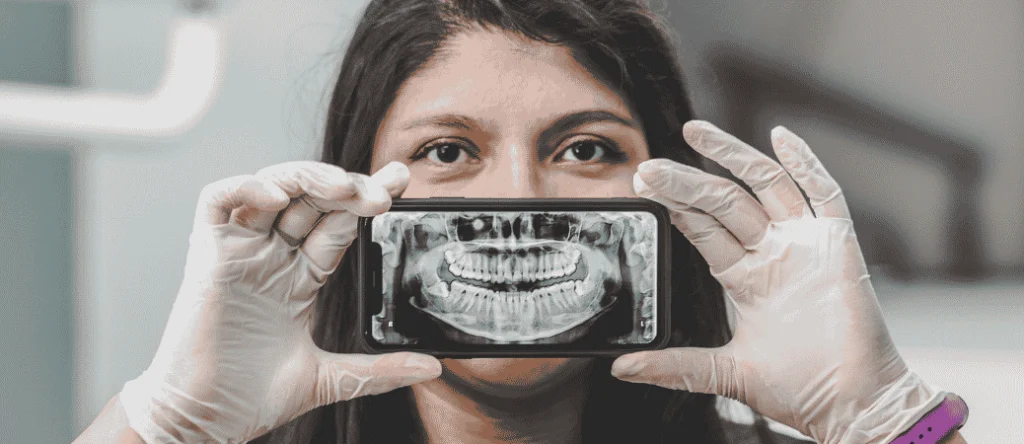
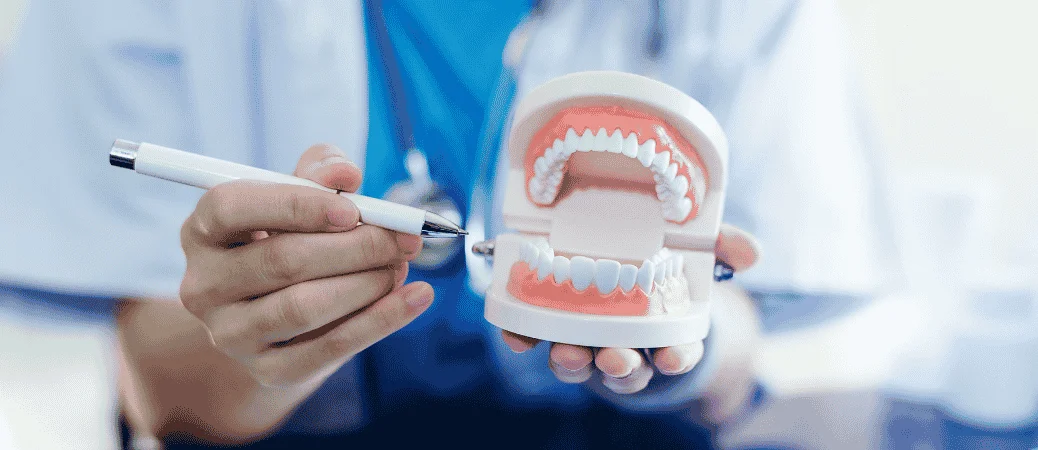
All-on-4 recovery happens in stages, with patients often feeling better before the implants have fully healed. Your individual timeline depends on how your body heals and the guidance provided by your dental team.
The short version patients want to hear is this: early comfort comes fast, but full healing takes months, not weeks.
You’ll leave the office with a fixed set of temporary teeth the same day as your all-on-4 dental implants procedure, which helps a lot psychologically.
That doesn’t mean the job underneath is done. Your jawbone is still quietly fusing to the titanium posts long after your face stops feeling swollen.
Planning around this timeline matters for practical reasons, not just comfort. You’ll need to think about time off work, what groceries to stock, and when your body is actually ready for a harder bite.
Key Takeaways
- Soreness and swelling generally improve during early recovery, while osseointegration takes considerably longer and varies from patient to patient.
- You’ll wear temporary fixed teeth from day one, but your final prosthesis waits until your dental team confirms the implants are stable.
- Diet, smoking, added procedures like bone grafting, and how closely you follow aftercare instructions can all shift your personal timeline.
Recovery Milestones: From Surgery Day to Final Teeth
All-on-4 recovery moves through four fairly predictable stages, though the exact pace depends on your body and your dentist’s specific instructions.
Swelling peaks early, soft tissue closes within weeks, and the slower work of bone integration continues quietly in the background for months before your final prosthesis is ready.
Surgery Day to Day 3: What Is Normal?
Swelling, mild bleeding, and jaw soreness are expected during the first three days, with swelling typically reaching its peak around day two or three.
You’ll go home the same day with a temporary prosthesis already fixed to your four implants, so you’re never without teeth.
Numbness from anesthesia gradually wears off after surgery. Follow your dental team’s instructions for managing discomfort as sensation returns.
Your dental team may recommend cold compresses during early recovery to help manage swelling. Keeping your head elevated while resting, even while sleeping, reduces fluid buildup in your face.
Stick to cold, soft foods and skip straws entirely, since suction can disturb the surgical sites.
Days 4 to 14: When Does the Soreness Ease?
Noticeable improvement usually starts around day four, with swelling and bruising fading steadily through the first two weeks.
Many patients describe day three as a turning point, where they start feeling more like themselves.
By the end of week one, bleeding should be minimal and discomfort often shifts from prescription-level pain relief to something more manageable.
This is also when you can gently introduce slightly firmer foods, like scrambled eggs or well-cooked pasta, while still protecting the surgical sites.
Saltwater rinses after meals help keep the area clean without irritating healing tissue.
Weeks 3 to 8: Why Does Healing Continue After You Feel Better?
Looking and feeling normal on the outside doesn’t mean the implants are finished bonding to bone.
Osseointegration, the process where your jawbone fuses directly with the titanium implants, is well underway during this stretch but isn’t visible or especially noticeable day to day.
Your gums may still shift shape slightly, which can mean a temporary prosthesis adjustment or two.
Mild tenderness, especially in the morning, is common during this phase. Follow-up visits during these weeks let your dental team check implant stability and confirm your bite is balanced, which matters more than it sounds.
An uneven bite that strikes too hard in one spot can create soreness and slow healing without you realizing why.
Months 3 to 6: When Are the Final Teeth Fitted?
Final, permanent teeth are typically fitted once osseointegration is complete, which for most patients falls somewhere between three and six months after surgery.
Roughly six months of healing is often used as the benchmark before finalizing restoration, since full bone integration and stable peri-implant tissue take time to confirm.
At this visit, your dentist removes the temporary bridge and attaches your custom permanent prosthesis. Minor bite adjustments are common, but most patients leave the same day with their finished smile in place.
The exact timing always depends on what your dentist sees at your individual check-ins, not a fixed calendar date.
When Can You Eat, Work, and Exercise Again?
Your return to work and exercise depends on how you feel, the physical demands of your job, and your dentist’s recommendations.
Less physically demanding activities may be resumed sooner than strenuous exercise or heavy lifting.
How Long Do You Need a Soft Food Diet?
A soft food diet is typically necessary for at least two to four weeks, though some dental teams recommend avoiding hard chewing closer to three months while osseointegration finishes.
Early on, think mashed potatoes, yogurt, scrambled eggs, and smoothies, nothing crunchy, sticky, or chewy. Straws are off-limits in the first days too, since the suction can disturb healing tissue.
As weeks pass, you can add fork-tender foods like soft chicken, well-cooked vegetables, and flaky fish.
Hard nuts, raw crunchy vegetables, ice, and sticky candies stay off the menu until your dentist confirms the implants can handle normal bite force.
When Can You Return to Work?
Many patients return to desk-based jobs within three to seven days, though plenty take a full week off to recover comfortably. Jobs involving physical labor or heavy lifting usually call for a longer break, often closer to two weeks, since elevated blood pressure and strain can affect healing sites.
Your own comfort level and how your swelling responds should guide the final decision more than any fixed calendar.
When Is It Safe to Resume Exercise?
Light activity like walking is usually fine within three to five days, while moderate exercise such as gym workouts or cycling is often reasonable around the two-week mark.
Strenuous activity and heavy lifting should wait at least seven to ten days, since intense exertion raises blood pressure and can disturb surgical sites.
Contact sports or anything with a real risk of facial impact should wait until your dentist confirms the implants are stable, sometimes until the final prosthesis is placed.
How Do You Care for Healing Implants?
Gentle cleaning, saltwater rinses, and consistent follow-up visits are important before, during or after the All-on-4 procedure to protect healing implants and catch problems early.
None of these require special skills, just consistency during a period when your mouth is more vulnerable than usual.
What Helps with Pain and Swelling?
Ice packs during the first 48 to 72 hours, followed by warm compresses afterward, are the most effective combination for swelling control.
Prescribed pain medication works best when taken on schedule rather than waiting for discomfort to build.
Sleeping with your head elevated on a couple of pillows also reduces overnight swelling, a simple trick that makes a real difference by morning.
How Should You Clean Your Mouth and Temporary Teeth?
Gentle brushing with a soft toothbrush, paired with saltwater rinses after meals, keeps the surgical area clean without disturbing healing tissue.
Avoid brushing directly on the implant sites during the first week, and skip vigorous swishing, since too much pressure can irritate healing gums.
Your dentist may also recommend an antimicrobial rinse for added protection against infection.
Later on, once your permanent bridge is placed, cleaning becomes a bit more involved.
Full-arch restorations require tools like superfloss or a water flosser to clean underneath the fixed teeth, something our guide on dental implant care covers in more detail.
Why Do Follow-Up Visits and Bite Checks Matter?
Follow-up visits let your dentist confirm implant stability and catch bite problems before they cause damage. An uneven bite, where pressure lands unevenly across the arch, can create soreness and interfere with the bone fusion process without any obvious outward sign.
These appointments also give your dental team a chance to adjust your temporary prosthesis as your gums settle and change shape during the first couple of months.
What Can Slow Healing or Signal a Problem?
Smoking, certain health conditions, and additional procedures like bone grafting or a sinus lift can extend your recovery timeline beyond the typical three to six months.
Recognizing which symptoms are normal and which need prompt attention from your dental team.
How Do Smoking, Health Conditions, and Extra Procedures Affect Recovery?
Smoking significantly raises the risk of implant failure by reducing blood flow to healing tissue, which slows or even halts the bone fusion process.
Conditions like uncontrolled diabetes can also affect how quickly your body heals around the four dental implants.
If your jawbone needed extra support, such as bone grafting or a sinus lift before implant placement, your timeline extends to allow that grafted bone to mature before the implants are loaded, and your dentist will plan around that added step.
Academic reviews of the All-on-4 treatment concept note that the protocol was specifically designed to often avoid the need for bone grafting by using tilted posterior implants, though some patients with lower bone density still require it.
Which Symptoms Mean You Should Contact Your Dental Team?
Worsening pain after day three, heavy bleeding beyond 48 hours, or a fever all warrant a call to your dental team right away.
A foul taste or smell from the surgical site can signal infection, and numbness in the lip, chin, or tongue lasting more than two days should be checked promptly.
Any sense that an implant feels loose or mobile needs immediate attention, since this can be an early sign of peri-implantitis or implant failure, and catching it early gives your dentist the best chance to intervene.
Feeling Better Comes Before Full Implant Healing

Comfort returns long before the biological work of healing finishes, and that gap is the single most important thing to understand about All-on-4 recovery.
Most of the soreness, swelling, and diet restrictions ease within the first two weeks. The implants themselves need three to six months to fully fuse with your jawbone before they’re ready for a permanent prosthesis.
Sticking to your soft food diet, showing up for follow-up visits, and avoiding smoking all protect that slower process even after you feel completely normal day to day.
Your own timeline depends on your health, whether you needed additional procedures, and how closely you follow your dentist’s specific instructions.
The team at Berkshire Smile Studio builds each patient’s follow-up schedule around these individual factors rather than a one-size-fits-all calendar, which is the most reliable way to protect a result meant to last for years.
Frequently Asked Questions
What should I expect two months after All-on-4 surgery?
By two months, most swelling and soreness have resolved, and you’re likely eating a wider variety of soft foods comfortably.
Osseointegration is actively happening beneath the surface, even though you may feel like healing is finished. Your temporary teeth should feel stable, though minor adjustments are still possible at follow-up visits.
Are All-on-4 implants fully healed after three months?
Osseointegration progresses at different rates depending on factors such as bone quality, implant stability, overall health, and the location of the implants.
Your dentist confirms readiness through clinical checks rather than a fixed date on the calendar. Full healing timing always depends on your individual bone quality and how well you followed aftercare instructions.
What are the signs that my dental implants are healing well?
Pink, healthy gums without ongoing swelling, comfortable chewing and speaking, and a temporary bridge that doesn’t shift are all good signs.
Your dentist confirms implant stability through follow-up exams and bite checks. Any new pain, looseness, or bad odor is worth mentioning at your next appointment rather than waiting it out.
When can I eat normally after All-on-4 surgery?
Most patients return to a fairly normal diet somewhere between four and six months, once their final prosthesis is in place and osseointegration is confirmed complete.
Before that, food progresses gradually from liquids and purees in the first week to fork-tender soft foods over the following months. Hard, crunchy, or sticky foods stay off-limits until your dentist gives the go-ahead.
What should I do if my temporary teeth feel loose?
Contact your dental team promptly if your temporary teeth feel loose or shift at all, since this can affect how the implants integrate with your bone.
A loose temporary bridge needs re-tightening or adjustment, and waiting can put unnecessary stress on healing implants.
This is one symptom that’s always worth contacting your dental team promptly rather than a wait-and-see approach.