


Dental implants can last for many years, but they still need daily care to stay healthy.
Good implant care means brushing twice a day, cleaning between your teeth, and seeing your dentist for regular checkups.
Implants are strong, but the gum and bone around them can still get infected if you skip proper care.
If you have implants, you already know how much better they feel than missing teeth. But keeping that new smile healthy takes more than just brushing.
You need the right tools, a steady routine, and a bit of knowledge about what your implants need to stay strong for years to come.
This guide walks you through simple dental implant care steps to keep your gums healthy. You will learn how to protect your implants after surgery, spot early signs of trouble, and know when to see your dentist.
With the right habits, you can support your oral health and keep your implant success on track for the long run.
Key Takeaways
- A daily cleaning routine helps keep your implants and gums healthy.
- Using the right tools and protecting your implants after surgery lowers your risk of problems.
- Regular dental visits and healthy habits help prevent inflammation and support long-term implant success.
Table of Content
- Start With a Consistent Daily Cleaning Routine
- Choose Tools That Clean Implant Areas Safely
- Protect Healing After Implant Surgery
- Prevent Inflammation, Bone Loss, and Damage
- Schedule Professional Monitoring and Maintain Healthy Habits
- Frequently Asked Questions
Start With a Consistent Daily Cleaning Routine
Good daily oral hygiene keeps your implant healthy and helps stop plaque and bacteria from building up around the gum tissue.
A simple routine of brushing, cleaning between teeth, and rinsing can protect your implant crown for years to come.
Brush Gently Twice a Day
You should brush your implant just like you brush your natural teeth, but with a soft touch. Use a soft-bristled toothbrush to avoid scratching the implant crown or irritating your gums.
An electric toothbrush can also work well, since many models are gentle enough for implants while still removing plaque effectively. Just make sure the brush head isn’t too stiff.
Pair your toothbrush with a non-abrasive toothpaste. Abrasive toothpaste can wear down the surface of your implant crown over time, so a gentle formula is your safest bet.
Try to brush for two full minutes, twice a day. This gives you enough time to clean around the implant and the rest of your mouth without rushing.
Clean Between Teeth and Around the Gumline
Plaque loves to hide between your teeth and along your gumline, so cleaning there matters just as much as brushing. Brushing and flossing together give you the best chance of keeping your implant free of buildup.
You don’t have to use traditional floss if it feels tricky around your implant. Interdental brushes or water flossers can reach tight spaces and clean around the implant crown without much effort.
Focus on the area where your implant meets your gum tissue. This spot can trap food and bacteria if it’s skipped, which may lead to irritation or gum health problems over time.
Make this step part of your daily routine, ideally once a day. Consistent cleaning here helps you avoid plaque buildup that can affect both your implant and the surrounding gum tissue.
Use a Gentle Antibacterial Rinse
Adding a rinse to your routine gives you an extra layer of protection against bacteria. An antibacterial mouthwash can help reduce the germs that brushing and flossing might miss.
Look for an alcohol-free antibacterial mouthwash if your gums tend to feel sensitive. Alcohol-based rinses can sometimes dry out your mouth or irritate the tissue around your implant.
Swish the rinse for about 30 seconds, then spit it out. This small step can support your gum health and help keep your mouth feeling fresh throughout the day.
Using a rinse once or twice daily, alongside brushing and flossing, rounds out a solid oral hygiene for dental implants routine that’s easy to stick with.
Choose Tools That Clean Implant Areas Safely
The right tools make a big difference when it comes to keeping your implant clean and your gums healthy.
A few simple additions to your routine, like special floss, small brushes, and a water flosser, can help you reach spots your toothbrush misses.
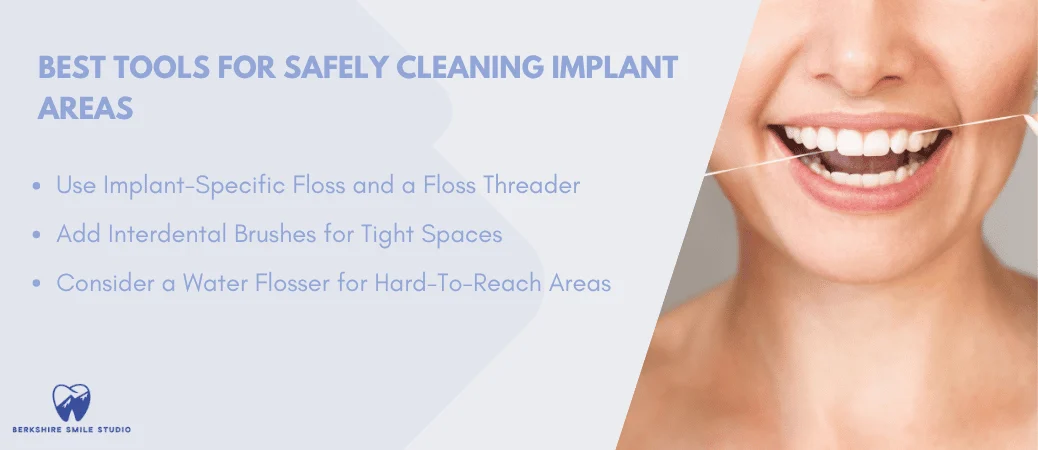
Use Implant-Specific Floss and a Floss Threader
Regular floss can be too rough for the area around your implant. Look for implant-specific floss, which is often thicker and softer to protect the gum tissue.
This type of floss is designed to glide around the implant without scratching it. If you have a bridge or crown attached to your implant, a floss threader helps you get the floss underneath.
You simply thread the floss through the loop, then guide it under the restoration. This lets you clean areas that regular flossing can’t reach.
Take your time and be gentle. Rushing can cause you to skip spots or irritate your gums.
Add Interdental Brushes for Tight Spaces
Interdental brushes are small, cone-shaped tools that clean between your teeth and around your implant. They come in different sizes, so you can pick one that fits your specific gap.
These brushes are great for removing plaque in tight spaces that floss might miss. Simply insert the brush gently between your teeth or around the implant, and move it back and forth a few times.
You don’t need to press hard. A light touch is enough to clean the area without hurting your gums.
Many people use these brushes daily, alongside their regular brushing and flossing routine. They’re small enough to carry with you if you need to clean on the go.
Consider a Water Flosser for Hard-To-Reach Areas
A water flosser uses a steady stream of water to flush out food particles and plaque. This makes it a helpful tool for cleaning around your implant, especially in spots that are hard to reach with floss or a brush.
Water flossers are gentle on your gums and easy to use. Just aim the tip along your gum line and let the water do the work.
Many models let you adjust the pressure, so you can find a setting that feels comfortable. This is especially useful for full-arch restorations like All-on-4, where cleaning can be harder due to the design.
Using a water flosser as part of your implant maintenance routine can help you keep your implant restoration clean and healthy for years to come.
Protect Healing After Implant Surgery
Taking care of your mouth in the days after implant surgery makes a big difference in how well you heal. Small choices about food, medicine, and daily habits can help your jawbone bond with the implant the right way.
Follow Your Dentist’s Instructions and Prescribed Medications
Your dentist knows your case best, so stick to their exact instructions after surgery. This includes taking any prescribed medications on schedule, even if you start to feel fine.
Follow your dentist’s recommendations for managing discomfort after implant surgery, including which pain relievers are appropriate for you.
Taking medications only as directed can help you stay comfortable while your implant site heals.
If your dentist prescribes antibiotics, take them exactly as directed and complete the prescribed course. Following your aftercare instructions can help lower the risk of infection and support healthy healing around the implant.
Don’t skip your follow-up visits either. Your dentist needs to check how your gums and bone are healing around the implant.
Eat Soft Foods and Avoid Pressure on the Surgical Site
What you eat matters a lot right after implant surgery. Stick to soft foods like yogurt, mashed potatoes, and scrambled eggs for the first several days.
Avoid hard foods that require a lot of chewing. Things like nuts, chips, and raw vegetables can put too much pressure on the surgical site and slow down healing.
Try to chew on the opposite side of your mouth if possible. This keeps direct pressure off the new implant while it settles into place.
Also stay away from hot foods and drinks for about a week. Heat can increase swelling and discomfort at the surgery site.
Most people can go back to their normal diet within one to two weeks, depending on how the area heals.
Support Osseointegration During Recovery
Osseointegration is the process where your jawbone grows around the implant and locks it firmly in place.
This process usually takes several weeks to a few months, so your daily habits during this time really matter.
Avoid smoking and alcohol, since both can slow down blood flow and bone healing. Nicotine especially can interfere with proper bone fusion and increase the risk of implant failure.
Don’t put extra strain on your jaw by chewing gum or biting on hard objects like pen caps. Gentle brushing and rinsing help keep the area clean without disturbing the healing bone.
Getting enough rest also supports your body’s natural healing process. Sleep is when your body does much of the repair work needed for the implant to bond securely with your jawbone.
Prevent Inflammation, Bone Loss, and Damage
Your implant can fail if gum inflammation, bone loss, or too much force on the crown go unchecked. The good news is that most of these problems are easy to prevent once you know what to watch for.
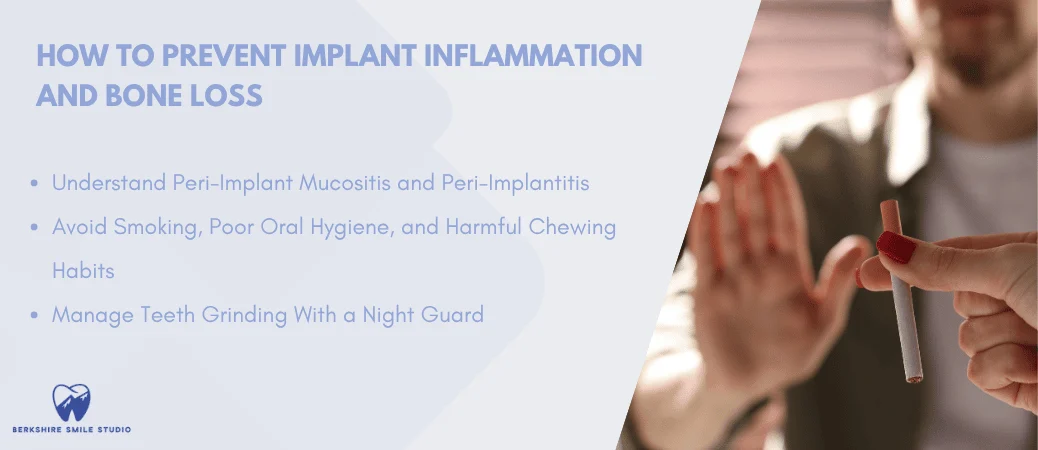
Understand Peri-Implant Mucositis and Peri-Implantitis
Plaque buildup around your implant can lead to two conditions you should know about.
Peri-implant mucositis is inflammation of the gum tissue around your implant. It causes redness, swelling, or bleeding when you brush or floss. This stage is reversible if you catch it early and improve your cleaning habits.
If left untreated, peri-implant mucositis can advance to full peri-implantitis, where the infection spreads to the bone supporting your implant.
This causes gum recession and bone loss, and it’s the leading reason implants fail.
A healthy implant should have very little bone loss even a year after placement. Your dentist can check this with gum measurements and X-rays, so don’t skip your checkups.
Avoid Smoking, Poor Oral Hygiene, and Harmful Chewing Habits
Poor oral hygiene is one of the biggest risks to your implant’s long-term health. Plaque that isn’t removed daily turns into a sticky film that irritates your gums and can lead to gum disease around the implant.
Smoking slows healing and reduces blood flow to your gum tissue, which raises your risk of infection and bone loss. If you smoke, cutting back, or quitting, can make a real difference in how long your implant lasts.
Your chewing habits matter too. Biting into hard foods like ice, hard candy, or nuts can crack or loosen your implant crown.
Try to stick to softer foods when possible, and cut hard items into smaller pieces before eating them. Skipping regular cleanings and ignoring these habits can shorten your implant’s lifespan, so consistency is key.
Manage Teeth Grinding With a Night Guard
If you grind or clench your teeth at night, a condition called bruxism, you’re putting extra stress on your implant every time you sleep.
This constant pressure can loosen the crown, damage the implant, or even cause it to fail over time.
A night guard is a simple fix. It’s a custom-fitted device you wear while sleeping that cushions your teeth and implant from the force of grinding.
Signs you might be grinding include jaw soreness, headaches, or a partner telling you they hear grinding at night.
If any of these sound familiar, ask your dentist about getting fitted for a night guard. It’s a small step that protects a big investment.
Schedule Professional Monitoring and Maintain Healthy Habits
Good implant maintenance doesn’t stop with brushing and flossing at home.
Regular checkups, quick action on warning signs, and smart food choices all work together to protect your gum health, bone density, and overall implant success.
Keep Up With Dental Cleanings and Implant Checkups
Your dentist can see and reach things you can’t at home. Professional cleanings remove hardened plaque and let your dental team check the health of the tissue and bone around your implant.
At Berkshire Smile Studio, Dr. Shakil Syed helps patients protect their dental implants with regular checkups and professional care designed to support long-term implant health.
Most dentists recommend implant checkups every 3 to 6 months. During these visits, your hygienist uses special tools made for implant surfaces.
Regular metal scalers can scratch titanium, so soft tips made of plastic or carbon fiber are used instead.
Your dentist will also take X-rays every so often. This helps them track bone loss around your implant before it becomes a bigger problem.
Catching changes early gives you a much better shot at fixing small issues before they turn into bigger ones.
If you have full-arch restorations, these checkups matter even more since more of your mouth depends on the implants staying healthy.
Watch for Changes That Need Prompt Dental Attention
Your mouth will usually give you warning signs before a real problem shows up. Pay attention to these signs and call your dentist right away if you notice them.
Here are some signs that mean you should not wait for your next scheduled visit:
- Swollen or bleeding gums around the implant
- Loose or wobbly feeling in the implant or crown
- Pain or tenderness that doesn’t go away
- Bad taste or odor near the implant site
- Visible gum recession exposing more of the implant post
These symptoms can point to gum disease or early bone loss, both of which threaten implant restoration success. The sooner your dentist checks it out, the easier it usually is to treat.
Support Long-Term Results With a Balanced Diet
What you eat plays a bigger role in implant health than most people realize. A balanced diet gives your gums and jawbone the nutrients they need to stay strong around the implant.
Foods rich in calcium and vitamin D, like dairy products, leafy greens, and fatty fish, support bone strength.
Vitamin C, found in citrus fruits and bell peppers, helps keep your gum tissue healthy and better able to fight off infection.
It also helps to limit sugary snacks and drinks, since sugar feeds the bacteria that cause gum disease.
Try to avoid biting down on very hard foods like ice or hard candy, since these can crack or damage the crown on top of your implant.
Small daily choices like these add up and can support the longevity of dental implants for years to come.
Frequently Asked Questions
Taking care of dental implants brings up a lot of questions, from daily cleaning habits to when you need to see a dentist.
Below are answers to the questions people ask most often about keeping their implants healthy for years to come.
How should I clean my dental implants at home?
You should brush your implants twice a day, just like you would with natural teeth. Use a soft-bristle brush and gentle, circular motions along the gum line to remove plaque without irritating the tissue.
Flossing is also important. You can use regular floss or a floss threader to clean under the crown and around the implant post, where plaque tends to build up.
Rinsing with an antibacterial mouthwash can help reduce bacteria in areas your brush and floss might miss.
This simple routine, done consistently, is one of the best ways to protect your implant from infection.
What tools are best for cleaning around dental implants?
A soft-bristle or electric toothbrush works well for daily brushing around implants. Electric brushes with a gentle setting can remove plaque effectively without scratching the implant surface.
Interdental brushes are also useful. These small, cone-shaped brushes fit between teeth and around implant posts, making it easier to clean spots that a regular toothbrush can’t reach.
Unwaxed floss or a floss threader helps you clean under bridges and around abutments.
Can I use a Waterpik to clean my dental implants?
Yes, a Waterpik or other water flosser can be a helpful addition to your routine. It uses a steady stream of water to flush out food particles and bacteria from around the implant and under the crown.
Water flossers are especially useful if you have a bridge or full-arch restoration, since they can reach areas that string floss might miss.
Just be sure to use a low or medium pressure setting so you don’t irritate the gum tissue around your implant.
How often should I have my dental implants professionally cleaned?
Most dentists recommend professional cleanings every 3 to 6 months for implant patients.
During these visits, your hygienist uses special tools made of plastic, titanium, or carbon fiber, since metal instruments can scratch the implant surface.
Your dentist may also take X-rays from time to time to check the bone level around your implant. This helps catch early signs of bone loss before you notice any symptoms yourself.
What are the most common causes of dental implant failure?
The most common cause of implant failure is peri-implantitis. This is an infection that causes inflammation in the gum tissue and can lead to bone loss around the implant if it’s not treated early.
Poor oral hygiene is usually the main trigger, since plaque buildup allows bacteria to spread under the gum line. Smoking, uncontrolled diabetes, and grinding your teeth can also raise your risk of implant problems.
What foods and habits should I avoid after dental implant surgery?
Right after surgery, stick to soft foods like yogurt, mashed potatoes, and scrambled eggs while your gums heal. Avoid hot foods and drinks for the first day or two, since heat can increase swelling.
Once your implant has healed, you can go back to a normal diet, but a few habits are still worth avoiding long-term. Chewing on ice, hard candy, or other very hard foods can crack the crown on top of your implant.
Smoking is another habit to avoid, since it slows healing and raises your risk of infection. If you grind your teeth at night, ask your dentist about wearing a nightguard to protect your implant from extra pressure.