

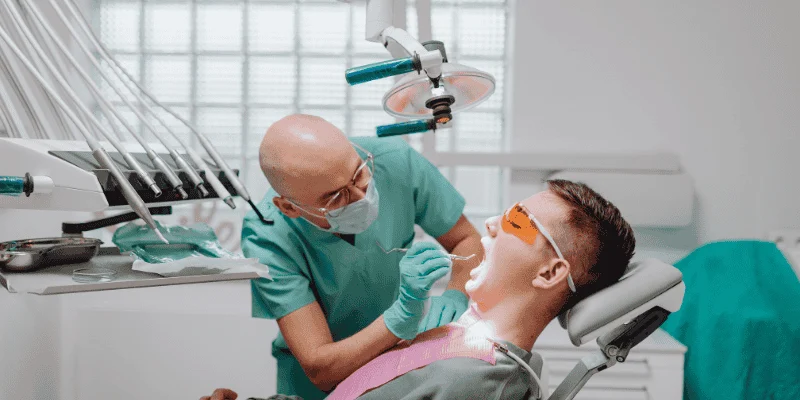
Missing a tooth can affect how you eat, speak, and feel about your smile. Dental implants offer a permanent solution that looks and works like natural teeth.
If you’re thinking about getting implants, knowing what happens at each step can help you feel more prepared and less worried.
Dental implants offer a permanent solution that looks and functions like natural teeth. In fact, studies show dental implants have a success rate of over 95%, making them one of the most predictable procedures in modern dentistry.
The dental implant process includes a consultation and planning phase, the surgical procedure to place the implant in your jawbone, a healing period that can last several months, and finally the placement of your new tooth crown.
Understanding the dental implant stages helps you know what to expect at each appointment and how long the whole process takes.
This guide walks you through everything from your first consultation to caring for your new implant after surgery.
You’ll learn about preparation steps, what happens in the operating room, how to manage pain during recovery, and how to keep your implant healthy for years to come.
Key Takeaways
- Dental implants require multiple stages including consultation, surgery, healing time, and final crown placement
- Most patients experience discomfort similar to a tooth extraction and can manage pain with over-the-counter medication
- With proper care and regular dental visits, implants can last for many years or even decades
Understanding Dental Implants and Their Benefits
Dental implants offer a permanent solution for missing teeth by replacing both the root and visible tooth structure. They provide stability that other tooth replacement options can’t match and help maintain your jawbone health over time.
What Are Dental Implants?
A dental implant is an artificial tooth root made of titanium that gets surgically placed into your jawbone. This small post acts as a foundation for your replacement tooth.
Once the implant fuses with your bone, your dentist attaches a connector piece called an abutment, then places a custom crown on top.
The crown looks and functions just like a natural tooth. Unlike dentures or bridges, implants don’t rely on neighboring teeth for support. They stand independently and integrate with your jaw structure.
Most implants are made from titanium because this metal bonds well with human bone. Some newer implants use zirconia, a white ceramic material that some people prefer for aesthetic reasons.
Benefits of Dental Implants
Dental implants can transform your smile while providing health benefits that go beyond appearance. They prevent bone loss in your jaw, which naturally occurs when you lose teeth. Your jawbone needs stimulation from tooth roots to maintain its density.
Research from the American Dental Association shows that dental implants can last 20 years or longer with proper care.
With implants, you can eat your favorite foods without worry. They provide the same biting force as natural teeth, unlike dentures that can slip or feel uncomfortable. You’ll also speak more clearly since implants don’t shift around in your mouth.
Benefits of dental implants include:
- Durability – They can last 25 years or longer with proper care
- Natural appearance – Custom crowns match your existing teeth
- Bone preservation – They stimulate jawbone growth
- No cavity risk – Artificial materials can’t decay
- Easy maintenance – You brush and floss them like regular teeth
Your neighboring teeth stay healthier too since implants don’t require grinding down adjacent teeth like bridges do.
Types of Dental Implants
The implant type you need depends on your jawbone condition and how many teeth you’re replacing. Endosteal implants are the most common and get placed directly into your jawbone. These work well if you have adequate bone density.
Subperiosteal implants sit under your gum but above the jawbone. Your dentist might recommend these if you don’t have enough healthy jawbone and want to avoid bone grafting procedures.
Single-tooth implants replace one missing tooth, while implant-supported bridges can replace several teeth in a row. If you’re missing all your teeth, implant-supported dentures attach to multiple implants for complete arch restoration.
Mini implants are smaller versions that require less invasive surgery. They’re often used for patients with narrow jawbones or to stabilize lower dentures.
Your oral surgeon will evaluate your specific situation during your consultation to determine which option best fits your needs in restorative dentistry.
Before Dental Implant Surgery: Preparation and Planning
Getting ready for dental implants involves several important steps that help your dental team create the best plan for your specific needs.
Your oral surgeon or periodontist will check your jawbone health, review your medical history, and give you clear instructions to follow before surgery day.
Initial Consultation and Evaluation
Your first visit is an implant consultation where your oral and maxillofacial surgeon or periodontist examines your mouth and reviews your medical history. They’ll ask about any health conditions like diabetes or heart disease that could affect healing.
They’ll also check if you smoke, since smoking can reduce implant success rates.
During this initial consultation, your implant dentist will examine your gums, remaining teeth, and the area where the implant will go.
They’ll look for signs of gum disease or other oral health problems that need treatment first. You’ll have a chance to ask questions about the procedure, costs, and what to expect during recovery.
Diagnostic Imaging and Assessing Jawbone Health
Your dental team will take dental x-rays and often use 3D imaging to assess bone density in your jaw. A CT scan gives detailed images that show exactly how much bone is available and where nerves and sinuses are located. This helps your oral surgeon plan the precise angle and depth for placing the implant.
If you have bone loss from missing teeth or gum disease, your jawbone might not be thick or tall enough to hold an implant. The imaging will show if you need a bone graft or sinus lift before getting the implant.
These scans also help identify any hidden problems that could affect the surgery.
Treatment Planning and Timeline
Your oral surgeon creates a treatment plan based on your imaging results and overall health. If you need a tooth extraction, bone grafting, or treatment for gum health issues, these procedures happen first.
A bone graft typically needs 3 to 6 months to heal before implant placement.
The full timeline from start to finish usually takes several months. After placing the implant, your jawbone needs time to fuse with the titanium post. Your treatment planning session will outline each step, how long recovery takes, and when you’ll get your final crown or restoration.
Pre-Surgery Instructions and Oral Hygiene
Before dental implant surgery, your dentist will give you specific instructions to follow. You’ll need to brush and floss carefully in the days leading up to surgery to reduce bacteria in your mouth.
Some patients receive antibiotics to take before the procedure.
You should avoid eating or drinking for 8 to 12 hours before surgery if you’re having sedation. Arrange for someone to drive you home since you won’t be able to drive after anesthesia.
Wear comfortable, loose-fitting clothing and avoid wearing jewelry or contact lenses on surgery day.
Good oral hygiene before your procedure significantly improves your chances of success and reduces infection risk.
Anesthesia and Comfort Options for Surgery
Your comfort during dental implant surgery depends on choosing the right anesthesia option for your needs.
Most patients receive local anesthesia, while others may benefit from sedation or general anesthesia based on the complexity of their procedure and personal comfort level.
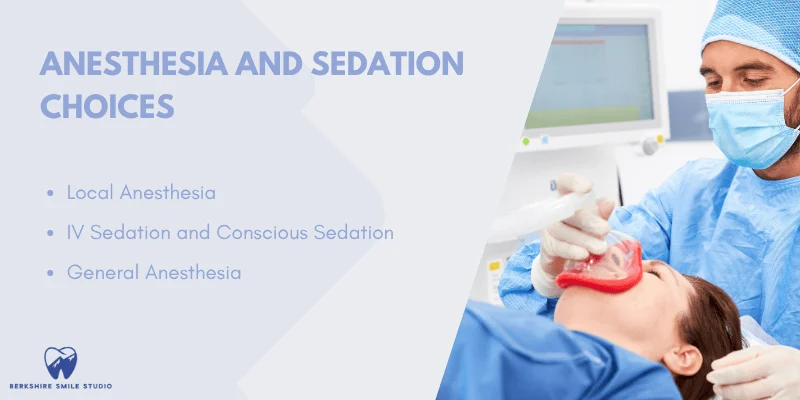
Local Anesthesia
Local anesthesia numbs only the area where your dentist will place the implant. Your oral surgeon injects medication into your gum tissue to block pain signals in that specific spot.
You stay fully awake and aware during the procedure. You can hear sounds and feel pressure, but you won’t experience pain in the treatment area.
This option works well for single implant placements. It’s the most common choice because it’s safe and wears off relatively quickly after surgery.
Benefits of local anesthesia:
- No recovery time from sedation
- Lower cost than other options
- Fewer medical restrictions
IV Sedation and Conscious Sedation
IV sedation delivers medication through a vein in your arm to help you relax during surgery. You remain conscious but feel drowsy and calm throughout the procedure.
Many patients don’t remember much about their surgery afterward. You can still respond to questions and follow simple instructions from your surgical team.
This anesthesia option combines well with local anesthesia for complete comfort. It’s ideal if you feel anxious about dental procedures or need multiple implants placed at once.
You’ll need someone to drive you home. The sedation effects typically wear off within a few hours.
General Anesthesia Considerations
General anesthesia puts you completely to sleep during surgery. You won’t be aware of the procedure at all and won’t remember anything afterward.
This option requires an anesthesiologist to monitor you throughout the surgery. It’s typically reserved for complex cases involving multiple implants, bone grafts, or patients with severe dental anxiety.
You must avoid food and drink after midnight before your surgery. Your medical history and current medications will be reviewed carefully before approval for general anesthesia.
Recovery takes longer than other options. You’ll need a full day to rest at home after your procedure.
During Dental Implant Surgery: Step-by-Step Process
The dental implant surgery involves placing a titanium implant into your jawbone, potentially adding bone grafting if needed, and attaching components that will support your final tooth restoration.
Implant Placement Procedure
Your oral surgeon or periodontist will start by numbing the area with local anesthesia. If you feel anxious about the surgical procedure, sedation options are available to help you stay comfortable and relaxed.
The implant placement begins with a small incision in your gum tissue to expose the jawbone underneath. Your oral and maxillofacial surgeon will then create a precise opening in the bone using specialized drills.
Each drill gradually increases in size to match the exact dimensions of your titanium implant.
Once the opening is ready, the titanium implant gets carefully inserted into your jawbone. This post acts as an artificial tooth root. The gum tissue is then stitched closed over or around the implant site.
The entire implant surgery typically takes one to two hours per implant. You’ll feel pressure during the procedure but shouldn’t experience pain due to the anesthesia.
Use of Bone Grafting or Sinus Lift
Some patients need additional procedures before or during implant placement. If your jawbone lacks sufficient density or height, a bone graft becomes necessary to create a stable foundation for your implant.
Common bone grafting scenarios include:
- Bone loss from missing teeth over time
- Gum disease that damaged the jawbone
- Previous tooth extraction sites that healed with insufficient bone
A sinus lift may be required if you’re getting an implant in your upper jaw and don’t have enough bone height below your sinus cavity. This procedure raises the sinus floor and adds bone grafting material to the area.
These additional steps can add three to six months to your overall treatment timeline. The bone graft needs time to heal and integrate before your periodontist can proceed with implant placement.
Placing the Abutment and Healing Cap
After your titanium implant fuses with the bone during a process called osseointegration, you’ll return for the next phase. This healing period usually takes three to six months.
Your oral surgeon will make a small incision to expose the top of your implant. An abutment gets attached to the implant, which serves as a connector between the implant post and your final restoration.
Some dentists place the abutment during the initial implant surgery, while others wait until the healing phase completes.
A healing cap goes on top of the abutment to protect it and shape your gum tissue properly. Your gums will heal around this cap for several weeks. In some cases, you might receive a temporary crown during this time to maintain your appearance and basic function.
The abutment placement is a minor surgical procedure that typically requires only local anesthesia. Once your gums heal completely around the abutment, your dentist can take impressions for your permanent crown.
After Dental Implant Surgery: Healing and Recovery
Recovery from dental implant surgery involves careful attention to wound care, pain control, and watching for signs of problems.
Most patients experience mild discomfort and swelling that improves within a few days, but understanding proper care steps helps protect your investment and supports successful healing.

Immediate Post-Operative Care
The first 24 to 72 hours after dental implant surgery are critical for setting up successful healing. You’ll likely notice swelling that peaks around day two or three, along with some light bleeding or pink-tinged saliva.
Apply ice packs to your face for 20 minutes on and 20 minutes off during the first day to reduce swelling.
Rest is important during this time. Keep your head elevated, even while sleeping, to minimize swelling. Avoid physical activity, bending over, or lifting heavy objects for at least three days.
First 72 Hours Care Checklist:
- Use prescribed pain medication as directed
- Apply ice packs during the first 24 hours
- Eat only soft, cool foods
- Avoid hot liquids and foods
- Don’t rinse your mouth vigorously
- Sleep with your head elevated
You should stick to a soft food diet including yogurt, smoothies, mashed potatoes, and soup. Skip crunchy, hard, or chewy foods that could disturb the surgical site.
Managing Discomfort and Preventing Infection
Pain management after dental implant procedures typically involves over-the-counter medications or prescription painkillers for the first few days.
Most people find that discomfort decreases significantly by day three and continues to fade through the first week.
Your dentist may prescribe antibiotics to prevent infection. Take the full course exactly as directed, even if you feel better before finishing the medication.
Starting 24 hours after surgery, gently rinse your mouth with warm salt water (one teaspoon of salt in eight ounces of water) three to four times daily, especially after meals.
Maintaining good oral hygiene is essential during the healing period, but you need to be gentle around the implant site. Brush your other teeth normally, but avoid the surgical area for the first few days.
After that, you can carefully clean around the implant with a soft-bristled toothbrush.
Don’t smoke or use tobacco products during recovery. Smoking significantly increases your risk of complications and can lead to implant failure.
Recognizing Complications and Implant Failure
While dental implant surgery is highly predictable, you should know the warning signs that require immediate attention.
Contact your dentist right away if you experience heavy bleeding that doesn’t stop with gentle pressure, pain that gets worse after initially improving, or swelling that increases after day three.
Warning Signs of Complications:
- Fever or chills
- Pus or foul odor from the surgical site
- Numbness that persists beyond the expected timeframe
- The implant feels loose or moves
- Severe pain not controlled by medication
Infection after dental implant placement can show up as persistent throbbing pain, discharge, or a bad taste in your mouth.
Early treatment of infection is crucial to saving your implant. Implant failure, though uncommon, may occur if the implant doesn’t properly fuse with your jawbone or if infection develops.
Most failures happen within the first few months, which is why following post-operative care instructions carefully is so important.
Long-Term Care, Maintenance, and Final Restoration
After your implant fuses with your jawbone, you’ll move into the final restoration phase where your new artificial tooth is attached. Regular follow-up appointments and proper daily care will keep your implant healthy for decades.
Osseointegration and the Healing Timeline
Osseointegration is when your jawbone grows around the titanium implant post. This process typically takes 3 to 6 months to complete.
During this time, your jawbone cells attach directly to the implant surface. The bond becomes strong enough to support chewing forces. Your dentist will schedule follow-up visits to monitor how well the implant is integrating with your bone.
You might have a temporary crown during this healing period. Some patients receive an immediate restoration, while others wait until osseointegration is complete.
Your specific timeline depends on your bone quality and the implant location in your mouth.
Key factors affecting healing time:
- Your overall health and age
- Bone density at the implant site
- Whether you needed a bone graft
- Smoking habits and oral hygiene
Final Restoration: Crowns, Bridges, and Dentures
Once osseointegration is complete, your dentist attaches an abutment connector piece to the implant. This takes about 2 weeks to heal before your final restoration is placed.
Your artificial tooth options include a single crown, bridge, or denture depending on how many teeth you’re replacing. Single crowns replace one tooth and look identical to your natural teeth.
Bridges attach multiple crowns together when you’re missing several teeth in a row.
The dentist takes impressions of your mouth to create a custom restoration. Your new tooth will match the color, shape, and size of your surrounding teeth. Most patients need one or two appointments to complete this final step.
Routine Dental Checkups and Professional Cleanings
You should visit your dentist every 6 months for checkups and professional cleanings. These follow-up appointments let your dentist examine the implant and surrounding gum tissue.
Professional cleanings remove plaque and tartar buildup around your implant. Your hygienist uses special tools that won’t scratch the implant surface. They’ll also check for any signs of infection or bone loss.
Daily care routine:
- Brush twice daily with a soft-bristled toothbrush
- Floss around the implant using unwaxed tape or implant-specific floss
- Use a water flosser to clean hard-to-reach areas
- Avoid chewing ice or hard foods that could damage the crown
Your implant can last 25 years or longer with proper maintenance. Report any pain, swelling, or looseness to your dentist right away.
Frequently Asked Questions
Many patients want to know how to get ready for their procedure, what discomfort to expect, and whether implants are the right choice for them. Cost, pain levels, and potential complications are common concerns that deserve clear answers.
How can I prepare for dental implant surgery?
Your preparation starts with a thorough dental exam and health review. Your dentist will take X-rays or 3D scans to check your jawbone and plan where to place the implant.
You should tell your dental team about all medications you take and any health conditions you have. Some medicines may need to be adjusted before surgery.
Good oral hygiene and quitting smoking before surgery can improve your chances of success. Clean your teeth well in the days leading up to your appointment.
Plan to have someone drive you home after the procedure if you receive sedation. Stock up on soft foods like yogurt, soup, and smoothies for your recovery period.
What are the potential side effects of getting a tooth implant?
Some swelling and discomfort around the implant site is normal after surgery. You might also notice minor bleeding or bruising in the first few days.
Pain is usually mild and can be managed with over-the-counter pain relievers or prescribed medication. Most patients feel back to normal within a week or two.
Infection at the implant site is possible but rare when you follow proper care instructions. Signs of infection include increased pain, swelling, or discharge.
In rare cases, the implant may not fuse properly with your jawbone. Nerve damage or sinus problems can occur if the implant is placed near these areas, though this is uncommon with experienced surgeons.
Can you walk me through the dental implant process step by step?
The first step involves making a small cut in your gum tissue to expose the jawbone. Your surgeon will use local anesthesia or sedation to keep you comfortable.
A titanium post is carefully inserted into the bone where your tooth root would normally be. This metal post will act as the foundation for your new tooth.
The gum is then stitched closed over or around the implant. A healing cap may be placed on top to protect the area while it heals.
Over the next three to six months, your jawbone grows around the implant in a process called osseointegration. This creates a strong, stable base for your replacement tooth.
Once healing is complete, your dentist attaches a small connector piece called an abutment. The final crown is then placed on top, giving you a tooth that looks and works like a natural one.
What are the different types of dental implants and their costs?
Endosteal implants are the most common type and are placed directly into your jawbone. These titanium screws work well for most patients who have enough healthy bone.
Subperiosteal implants sit under the gum but on top of the jawbone. These are used when you don’t have enough bone height and don’t want a bone graft.
Single tooth implants typically cost between $3,000 and $4,500 per tooth. This price usually includes the implant post, abutment, and crown.
Multiple tooth implants or implant-supported bridges can range from $6,000 to $10,000. Full mouth dental implants may cost $24,000 to $100,000 depending on how many implants you need and the type of restoration.
Many dental insurance plans cover part of the cost, especially if the tooth loss was due to injury or disease. Payment plans are often available to make treatment more affordable.
What is the most painful part of the dental implant procedure?
Most patients report feeling little to no pain during the actual surgery because of anesthesia. The area is completely numbed before any work begins.
The first few days after surgery are when you’ll feel the most discomfort. Your mouth may be sore and tender around the implant site.
Swelling usually peaks around day two or three after the procedure. Eating, talking, and normal mouth movements might feel uncomfortable during this time.
The pain is generally less than what you’d experience with a tooth extraction. Many people manage their discomfort with regular pain medication and ice packs.
Are there any reasons I should consider not getting dental implants?
If you have uncontrolled diabetes, your body may have trouble healing properly after surgery. You’ll need to get your blood sugar under control before moving forward with implants.
Heavy smoking can reduce the success rate of dental implants. The chemicals in tobacco slow down healing and can prevent the implant from fusing with your bone.
You need enough healthy jawbone to support an implant. If you’ve been missing teeth for a long time, your bone may have deteriorated too much without a bone graft first.
Certain medications like bisphosphonates used for osteoporosis can affect bone healing. Active gum disease must be treated before implant surgery to reduce the risk of infection.
Young patients whose jawbones are still growing should wait until they reach full skeletal maturity. Cost may also be a factor if you don’t have insurance coverage or can’t arrange financing.