
Many older adults wonder if they’re too old for dental implants when facing tooth loss.
Dental implants can successfully replace missing teeth in older adults, with studies showing survival rates above 98% over 10 years, and age alone is not a barrier to treatment.
Your overall health and bone quality matter more than the number on your birthday cake.
Dental implants offer seniors a permanent solution that works better than traditional dentures. Unlike removable dentures that can slip and make eating difficult, implants function like natural teeth.
This means you can enjoy your favorite foods again and speak with confidence.
The good news is that dental implant technology has advanced significantly. Even patients in their 90s have received implants successfully when properly evaluated.
Whether you need to replace one tooth or several, understanding your options can help you make the best choice for your smile and quality of life.
Key Takeaways
- Dental implants work well for older adults regardless of age if you have adequate bone density and good overall health
- Implants provide better chewing ability and stability compared to dentures, which improves nutrition and quality of life
- Success rates for dental implants in seniors exceed 98% over 10 years when properly planned and maintained
Explore how dental implants for seniors can restore your smile and improve daily comfort.
Why Dental Implants Are a Top Choice for Replacing Missing Teeth in Older Adults
Dental implants offer older adults a stable and long-lasting solution that addresses the common problems with traditional dentures while preserving jawbone health and restoring full chewing function.
Limitations of Traditional Dentures
Traditional dentures can create daily challenges that affect your comfort and confidence. They often slip or click during eating and speaking, which can cause embarrassment in social situations.
You might find yourself avoiding certain foods because your denture doesn’t provide enough stability for proper chewing.
Common denture problems include:
- Difficulty eating hard or sticky foods
- Sore spots and gum irritation
- Need for messy adhesives
- Frequent adjustments and replacements
- Bone loss that changes facial structure
When you wear a traditional denture, it sits on top of your gums without stimulating the jawbone underneath. This leads to bone resorption over time, causing your face to develop a sunken appearance.
Your denture will need refitting as your bone continues to shrink.
Benefits of Dental Implants for Seniors
Dental implants are small titanium posts that replace tooth roots and fuse with your jawbone. Unlike bridges or dentures, implants replace tooth roots and provide stability that feels like natural teeth.
The posts act as artificial roots that stimulate your jawbone, preventing the bone loss that occurs with tooth loss. This maintains your facial structure and keeps you looking younger.
With proper care, your dental implants can last a lifetime.
You don’t need adhesives or special cleaning routines. Simply brush and floss your replacement teeth like you would natural teeth. Implant-supported dentures and implant-supported bridge options give you flexibility based on how many teeth you’re replacing.
Many people wonder if they’re too old for this treatment. There’s no upper age limit for dental implants as long as you have good general health and adequate bone density.
Quality of Life Improvements
Getting dental implants can transform your daily life in meaningful ways. You’ll regain the ability to eat foods you’ve been avoiding, from fresh apples to corn on the cob. Your speech will be clearer without the slurring that removable dentures can cause.
Implants for older adults restore confidence in social settings. You won’t worry about your teeth slipping during conversations or meals with friends and family. The secure fit means you can laugh, smile, and talk without hesitation.
Your nutrition often improves when you can chew properly again. Many older adults with traditional dentures limit their diet to soft foods, missing out on important nutrients from vegetables, fruits, and proteins.
Dental implant surgery helps you maintain a balanced diet that supports your overall health and energy levels.
Candidacy and Considerations for Dental Implants in Older Adults
Getting dental implants as an older adult depends more on your overall health and bone quality than your actual age.
Your ability to maintain good oral hygiene and manage existing medical conditions plays a bigger role in determining if you’re a good candidate.
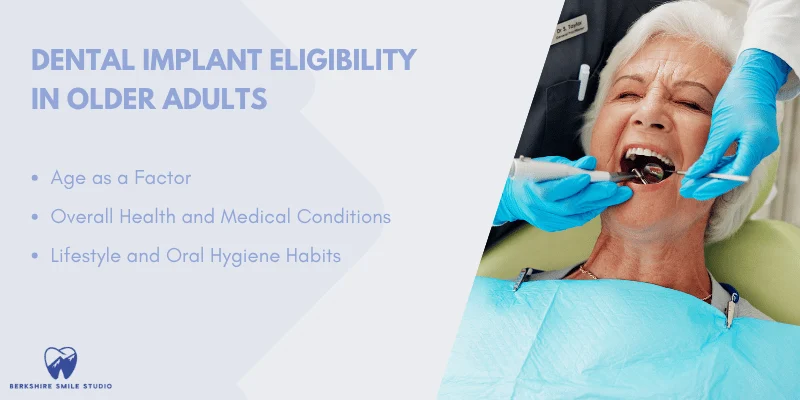
Age as a Factor
Age alone rarely disqualifies you from getting dental implants. Studies show dental implants can have a success rate of over 95% in adults with proper care.
Success rates in patients in their 70s and 80s may vary based on individual health factors. However, your dental surgeon will focus on your bone density and healing ability rather than the number on your birthday cake.
Implants for seniors offer a permanent solution that can last for decades. Research shows that older patients who receive implants in their 50s may need to manage complications in their 70s alongside other medical conditions.
Your implant dentist will consider your long-term health outlook when planning treatment.
Overall Health and Medical Conditions
Your medical history matters more than your age when determining candidacy. Conditions like diabetes, cardiovascular disease, and osteoporosis can affect implant success.
Common health considerations include:
- Diabetes: Can increase healing time and infection risk
- Heart disease: May require special monitoring during implant placement
- Osteoporosis medications: Some drugs increase risk of jawbone complications
- Blood thinners: Can cause bleeding issues during surgery
You’ll need medical clearance from your doctor if you have significant health conditions. Your dental surgeon may coordinate with your healthcare team to ensure safe treatment.
Patients taking blood thinners or osteoporosis medications need special planning before surgery.
Lifestyle and Oral Hygiene Habits
Your daily habits directly impact implant success. Implants stay in place and prevent bone loss that occurs after tooth loss, but they need proper care.
You must commit to brushing twice daily and cleaning around your implants. Arthritis or reduced hand strength can make oral hygiene harder.
Your implant dentist may recommend special tools like electric toothbrushes or floss holders.
Regular dental check-ups become essential after getting implants. You’ll need professional cleanings every 3-6 months to prevent infections around the implant.
Smoking significantly reduces implant success rates and slows healing, so quitting improves your chances of long-term success.
Bone Health and Jawbone Requirements
Strong jawbone density plays a key role in dental implant success, but aging often brings bone loss that can complicate the process. Older adults may need extra procedures to rebuild their jawbone before implants can be placed safely.

Impact of Bone Loss in the Elderly
When you lose a tooth, your jawbone starts to break down because it no longer gets the stimulation it needs. This process, called jawbone deterioration, happens faster as you age.
Your body naturally loses bone density over time, which makes the problem worse.
Bone loss affects your facial structure and can change how your face looks. Your cheeks may appear sunken, and your jaw may seem smaller.
Years of wearing dentures can speed up this bone loss since they sit on top of your gums without providing the deep stimulation your jawbone needs.
Older adults who have been missing teeth for many years often have severe bone loss. This makes it harder to place traditional implants, but it doesn’t mean implants are impossible for you.
Assessing Jawbone Density
Your dentist will use special imaging tools to check your bone health before recommending implants. A 3D cone beam CT scan gives a detailed view of your jawbone and shows exactly how much bone you have in different areas.
These scans measure bone density and volume to determine if you have enough support for implants. Your dentist looks at the height, width, and quality of your jawbone.
They also check the location of important structures like nerves and sinuses.
The assessment reveals whether you can receive standard implants right away or if you need bone augmentation first. Your overall health, medications, and conditions like osteoporosis also factor into the evaluation.
Solutions for Insufficient Bone
Bone grafting rebuilds your jawbone by adding natural or synthetic bone material where bone loss has occurred. The graft material encourages your body to grow new bone over several months.
Once the bone regenerates, your dentist can place implants that go through osseointegration, where the implant fuses with your natural bone.
A sinus lift raises the sinus floor and adds bone to your upper jaw when you don’t have enough height for implants. This procedure is common for replacing upper back teeth.
Other options for severe bone loss include:
- Zygomatic implants that anchor into your cheekbone instead of your jawbone
- All-on-4 implants that use four strategically placed implants to support a full arch of teeth
- Shorter or angled implants designed for areas with limited bone
Advances in implant dentistry make bone loss a solvable problem in most cases. Your dentist will recommend the best approach based on your specific bone condition.
Types of Dental Implants and Tooth Replacement Options for Seniors
Older adults can choose from several types of dental implants based on how many teeth need replacement and their specific health needs. These options range from single tooth replacements to full-arch solutions that restore an entire set of teeth.
Single-Tooth Implants
A single-tooth implant uses one titanium post that acts as an artificial tooth root. Your dentist places this post directly into your jawbone where your natural tooth root once was.
The titanium post bonds with your bone over several months. This process creates a stable base for the replacement tooth. Most single implants use endosteal implants, which are the most common type.
After healing, your dentist attaches an abutment to the post. Then they place a custom crown on top that matches your other teeth.
This option works well when you only need to replace one tooth and want to avoid affecting nearby healthy teeth.
Single tooth implants typically cost between $3,000 and $6,000 per tooth. The final price depends on your location and whether you need extra procedures like bone grafting.
Implant-Supported Bridges
An implant-supported bridge replaces several missing teeth in a row using two or more artificial tooth roots. Unlike traditional bridges, this option does not require grinding down healthy teeth next to the gap.
Your dentist places implants at each end of the missing teeth section. These posts support a bridge that fills the entire gap. For example, two implants can hold a bridge that replaces three or four teeth.
This approach costs less than replacing each tooth individually with separate implants. You get the stability of tooth implants without needing one post for every missing tooth. The dental bridge stays permanently in place and functions like natural teeth.
Recovery time matches single implants since the process involves placing posts into your jawbone. Most patients heal fully within three to six months.
Implant-Supported Dentures and Overdentures
Implant-supported dentures use two to six implants to hold dentures firmly in your mouth. These dentures snap onto the implants and stay secure while you eat and talk.
You can remove an implant-retained denture for cleaning, which makes daily care easier. The implants prevent your dentures from slipping or moving around.
Most people need only two implants for lower dentures and four for upper dentures.
This option costs between $6,000 and $20,000 per arch. The price varies based on how many implants you need and what type of attachment system your dentist uses.
Benefits of implant-supported dentures:
- More stable than regular dentures
- Easier to clean than fixed implants
- Lower cost than full-arch replacements
- Helps preserve jawbone health
Recovery takes less time than other options since fewer implants are needed.
All-on-4 and Other Advanced Solutions
The all-on-4 system replaces an entire arch of teeth using just four strategically placed implants. Your dentist angles the back implants to maximize contact with your bone.
This method often allows you to receive temporary teeth on the same day as your surgery. You walk out with a full set of functional teeth instead of waiting months. The final permanent teeth go in after your implants fully heal.
All-on-4 typically costs $15,000 to $30,000 per arch. This price includes the surgery, implants, and prosthetic teeth. Some dentists offer similar systems using six or eight implants for added stability.
These advanced solutions work well if you have lost most or all teeth in one arch. They provide a fixed, permanent option that does not come out like traditional dentures.
You brush and care for them just like natural teeth.
What to Expect: The Dental Implant Process for Older Adults
The dental implant process involves several stages from your first appointment through final placement. You’ll work with dental professionals who will evaluate your oral health, perform the surgery, and guide you through recovery.
Consultation and Planning
Your first visit involves a complete evaluation of your mouth and jawbone. Your dentist or oral surgeon will assess your bone density using X-rays and scans to confirm you’re eligible for implants.
During this appointment, your dental team will review your medical history and any medications you take. This helps them identify potential issues that might affect healing.
Some older adults need extra treatments before implant surgery. Your dentist may recommend bone grafting if you have reduced bone density. They might also suggest periodontal therapy if you have gum disease.
You’ll discuss costs, payment options, and what your insurance might cover. Your dental team will create a treatment plan that shows how many appointments you’ll need and how long the entire process will take.
Dental Implant Surgery Explained
Dental implant surgery is a minor procedure that typically uses local anesthesia. Your oral surgeon will place titanium posts into your jawbone where teeth are missing.
The dental implant placement procedure replaces your tooth roots with metal posts. These posts look like small screws that go directly into your jaw.
Most implant surgery takes one to two hours per implant. You’ll be awake but won’t feel pain during the procedure. Your dentist can offer sedation dentistry services if you feel anxious about dental surgery.
After placing each implant, your surgeon will close the area with stitches. Some procedures let you wear temporary teeth while you heal.
Recovery and Healing Timeline
You may have mild swelling and discomfort for a few days after implant surgery. This is normal and usually goes away within a week.
Your implants need time to bond with your jawbone through a process called osseointegration. This typically takes three to six months to complete. The implants must fully fuse with bone before your dentist can attach permanent teeth.
During healing, eat soft foods and avoid putting pressure on the implant sites. Your dentist may give you pain medication and antibiotics to prevent infection.
Once osseointegration finishes, you’ll return for another small procedure. Your dentist will attach an abutment to each implant. The abutment connects your implant to the replacement tooth.
After your gums heal around the abutment for one to two weeks, your dentist will place your permanent crown or bridge.
Follow-Up Care and Maintenance

You’ll need regular check-ups to make sure your implants stay healthy. Your dentist will check implant stability and look for any problems with your gums or jawbone.
Taking care of dental implants is similar to caring for natural teeth. Brush twice daily and floss around each implant. Use antibacterial mouthwash to keep bacteria away.
Visit your dentist every six months for cleanings and exams. Professional cleanings remove buildup that regular brushing might miss.
Avoid chewing hard foods like ice or hard candy that could damage your implants. Don’t use tobacco products since they slow healing and increase the risk of implant failure.
Call your dentist right away if you notice pain, swelling, or loose implants.
Risks, Success Rates, and Cost Considerations
Dental implants offer high success rates for older adults, though you should understand the potential complications and financial commitment involved.
The cost can be significant, but the long-term benefits often outweigh alternatives like dentures.
Implant Success Rate in Older Adults
You’ll be glad to know that dental implants have a 97% success rate at 10 years and maintain a 75% success rate even after 20 years. These numbers hold strong regardless of your age.
Research comparing 400 patients over 65 years with younger groups found only a 2% failure rate across both age groups over a decade. Even patients over 80 years experienced only slightly higher complication rates.
This means your age alone shouldn’t discourage you from considering implants.
The healing process typically takes several months. You’ll need to follow your implant dentist’s cleaning instructions carefully and attend regular check-ups. If you notice any looseness or pain, contact your provider right away.
Potential Risks and Complications
While complications are rare, you should know what could happen. Implant failure can occur due to infections, which are more common if you have diabetes. Smoking can slow your healing process and increase failure risk.
Other potential issues include:
- Damage to surrounding teeth during surgery
- Mechanical problems like loose screws
- Challenges maintaining proper oral hygiene
- Slower bone integration
Gum disease poses a particular concern, as it can compromise the stability of your implant. If you already have periodontal issues, your dentist will likely treat them before placing implants.
Tooth decay in neighboring teeth can also create problems. You’ll need to maintain excellent oral care habits to protect both your natural teeth and implants.
Comparing Costs of Dental Implants and Alternatives
The cost of dental implants varies based on several factors. A single tooth implant can cost up to $6,000 without insurance coverage. This makes a full mouth of implants quite expensive.
Your total cost depends on:
- Number of implants needed
- Type of implant (endosteal vs. subperiosteal)
- Location in your jaw
- Any preparatory procedures required
Dentures cost less upfront but need replacement more frequently. Dental implants typically don’t need replacement for at least a decade, making them a more permanent solution despite higher initial costs.
Insurance, Affordability, and Financing
You should check your private health insurance plan benefits for details on dental implant coverage and anticipated coinsurance. Many plans offer partial coverage, though dental implants aren’t always fully covered.
If you don’t have insurance, ask your implant dentist about payment plans or financing options. Some practices offer in-house financing or work with third-party lenders to make treatment more affordable.
Access to dental care varies by demographic factors. Studies show that certain populations may have less access to implant procedures due to cost barriers and social determinants of health.
Frequently Asked Questions
Older adults considering dental implants often have questions about age limits, costs, and eligibility. Insurance coverage and bone loss are common concerns that affect treatment decisions.
Are dental implants a good option for people in their 70s, 80s, or 90s?
Dental implants can be used by older adults in their 70s, 80s, and 90s. Age itself is not a barrier to getting implants.
A study comparing 400 patients over 65 years to a younger group found only a 2% failure rate across both groups over 10 years. Even participants over 80 years experienced only a slightly higher rate of complications.
Your overall health matters more than your age. As long as you’re healthy enough for the procedure and can heal properly, you can be a good candidate for implants.
What factors determine whether an older adult is a good candidate for dental implants?
Your dentist will look at several factors to decide if you’re a good candidate. These include your general health, the condition of your jawbone, and your ability to maintain oral hygiene.
Certain health conditions can affect your success with implants. If you have diabetes, you may face a higher risk of infection. Smoking can slow down healing and increase the chance of implant failure.
Your jawbone needs to be strong enough to support the implant. You’ll also need healthy gums and must be able to commit to regular dental checkups. Following cleaning and recovery instructions carefully is essential for success.
How much do dental implants typically cost for seniors, and what affects the price?
A single tooth implant can cost as much as $6,000 without insurance coverage. A full mouth of implants will be significantly more expensive.
Several factors affect the final price. The number of implants you need and the type of implant both play a role. Where in your jaw the implant will be placed also matters.
You might need preparatory procedures before getting implants. These additional treatments will add to your total cost.
Do Medicare or supplemental insurance plans help cover the cost of dental implants?
You should check your private health insurance plan for details on dental implant coverage. Each plan has different benefits and coinsurance amounts.
Medicare typically doesn’t cover dental implants since they’re considered a dental procedure. Some Medicare Advantage plans may offer limited dental benefits. Supplemental insurance plans vary widely in what they cover for dental work.
Contact your insurance provider directly to find out what your specific plan covers. Ask about any requirements or pre-approvals you might need.
Can seniors with bone loss still get dental implants, and what treatments might be needed first?
You can still get dental implants even if you have some bone loss. People with lower jawbone height may need subperiosteal implants, which are placed on top of the jaw instead of inside it.
Your dentist might recommend bone grafting before placing implants. This procedure adds bone material to strengthen your jaw. It creates a solid foundation for the implant to attach to.
The preparatory procedures will extend your treatment timeline. They’ll also add to the overall cost of your dental implants.
Are there any programs or clinics that offer free or low-cost dental implants for seniors?
Some dental schools offer reduced-cost implant procedures performed by students under supervision. Community health centers may provide sliding scale fees based on your income.
Nonprofit organizations sometimes offer dental assistance programs for seniors. Your local Area Agency on Aging might have information about available resources.
Some dentists offer payment plans to make implants more affordable. You can also look into dental discount plans or healthcare credit cards designed for medical procedures.