

If you have lost most or all of your teeth, you may feel frustrated with loose dentures or the idea of getting many separate implants. You want a stable option that looks natural and lets you eat and speak with ease.
The All-on-4 dental implant procedure replaces a full arch of teeth using just four implants that support a fixed set of new teeth.
Your dentist places four titanium dental implants in your jaw, often adding a temporary set of teeth the same day so you leave with a complete smile.
This approach can reduce the need for bone grafting and limit the number of surgeries compared to traditional implants.
As you explore how it works, who qualifies, and what to expect, you can decide if this solution fits your goals and budget.
Key Takeaways
- All-on-4 uses four implants to support a full arch of fixed teeth.
- You can often receive temporary teeth on the same day as surgery.
- Long-term success depends on proper care, health, and follow-up visits.
How All-on-4 Dental Implants Work
All-on-4 dental implants replace a full arch of teeth by placing four implant posts in key areas of your jaw.
The dental implant procedure relies on precise implant placement, same-day fixed teeth, and strong bone bonding through osseointegration.
Strategic Implant Placement
Your surgeon places four titanium implants in specific areas of your jawbone. Two implants go in the front, where bone is usually thicker and stronger.
The other two sit in the back at an angle, which helps avoid areas like the sinus cavity in the upper jaw or the main nerve in the lower jaw.
This angled approach is a key part of the All-on-x treatment concept. It allows your provider to support a full-arch restoration without adding more implant posts or using bone grafts in many cases.
Each all-on-4 implant acts like an artificial tooth root. Together, the four implants create a stable base for your full mouth restoration. Careful planning with digital scans helps your dentist choose the best position and angle for long-term support.
Immediate Function and Fixed Teeth
One major benefit of all-on-4 dental implants is that you often receive fixed teeth within 24 hours of surgery. Your dentist attaches a temporary set of prosthetic teeth to the implants on the same day or soon after.
This approach is called immediate loading. It allows you to leave the office with a full smile instead of waiting months without teeth.
Your temporary prosthetic teeth stay fixed in place. You do not remove them like dentures.
After your jaw heals, your dentist replaces the temporary bridge with a permanent prosthesis, often made from stronger materials such as zirconia or reinforced acrylic.
Osseointegration Process
After implant placement, your body begins a natural healing process called osseointegration. During this stage, your jawbone grows around the titanium implants and bonds to them.
This bond turns each implant post into a stable anchor. Osseointegration usually takes several months, even though you already have fixed teeth in place.
Titanium works well because your bone accepts it and forms a tight connection. Once healing finishes, your all-on-4 dental implant system can handle normal biting forces across the full arch.
Your dentist will check your progress with follow-up visits and imaging. Good oral hygiene and regular cleanings help protect your all-on-4 implants and support long-term success.
Step-by-Step Treatment Process
You move through clear stages, from exam to final teeth. Your team plans each step to place four implants with strong support and a natural look.
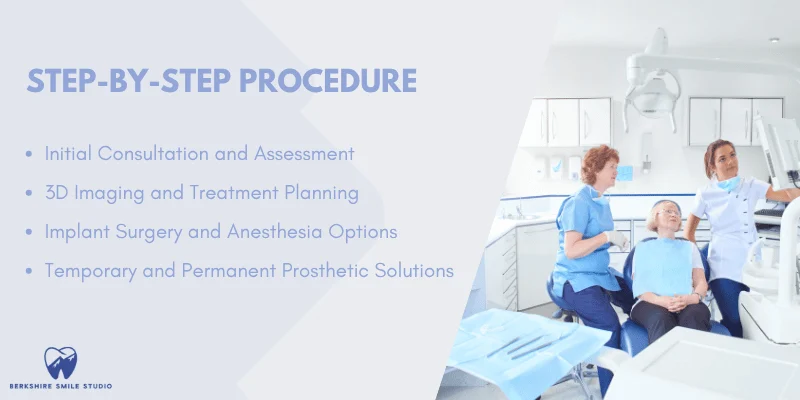
Initial Consultation and Assessment
You start with a full exam by an oral surgeon, prosthodontist, or dental implant specialist. Many patients choose an experienced all-on-4 dentist who focuses on full-arch care.
Your provider reviews your medical history, checks your gums, and tests your bite.
They take a dental x-ray and often a CBCT scan (3D CT scan) to measure bone height and width. This scan shows nerves and sinuses so your team can avoid them.
You discuss goals, budget, and timing. If you want teeth in a day, your dentist checks if your bone can handle immediate load.
Before you leave, you receive a clear treatment plan. It lists the number of dental implants, anesthesia type, timeline, and the plan for a temporary prosthesis.
3D Imaging and Treatment Planning
Your CBCT scan guides digital planning. The software lets your provider place virtual implants in the strongest bone.
In the All-on-4 method, two front implants sit straight. Two back implants tilt up to about 30–45 degrees to use more bone and avoid sinuses..
Your team designs a custom surgical guide from this plan. A lab or in-office printer makes it. During surgery, this guide directs the drills for guided implant placement, which improves accuracy.
Some systems, such as Nobel Biocare, provide tools and components made for all on four implants. Your dentist selects parts that match your bone quality and final bridge design.
Implant Surgery and Anesthesia Options
On surgery day, your team places the surgical guide and begins implant surgery. You do not feel pain during the procedure.
You can choose:
- Local anesthesia with sedation
- IV sedation
- General anesthesia in select cases
Your dentist helps you choose based on health, anxiety level, and case complexity.
The surgeon removes any failing teeth and smooths the bone. Then they place four dental implants into the jaw. They measure stability using torque values to confirm the implants can support a temporary denture the same day.
Most surgeries take several hours per arch. You go home with instructions and medication to manage swelling and discomfort.
Temporary and Permanent Prosthetic Solutions
If your implants reach strong stability, your team attaches a temporary prosthesis the same day. Many call this teeth in a day.
The lab adjusts a reinforced temporary denture and fixes it to the implants. This bridge lets you smile and eat soft foods while healing begins.
Over the next 3–6 months, your implants bond with your bone. During this time, you attend follow-up visits so your dentist can adjust your bite.
After healing, your prosthodontist replaces the temporary with a custom permanent bridge. This final restoration often uses zirconia or ceramic for strength and easier cleaning.
It screws into place and only your dental team removes it for maintenance.
Visit us in Pittsfield, MA to learn if all-on-4 dental implants are right for your smile.
Candidacy and Comparison With Other Options
Your jaw bone density, oral health, and long-term goals decide if All-on-4 fits your needs. You should also understand how it compares with traditional implants and removable dentures before you choose a full-arch solution.
Who Is Eligible for All-on-4
You may qualify for All-on-4 if you have lost most or all teeth in one arch. Dentists often recommend it when teeth cannot support a dental bridge or when traditional dentures feel unstable.
Your jaw bone structure and jaw bone density matter. All-on-4 uses four implants placed at specific angles to support a full arch. This design can help people who have some bone loss avoid bone grafting.
Many people who do not want removable dentures look into this option. The treatment works best if your gums are healthy and you do not have uncontrolled medical issues.
Differences From Traditional Implants
Traditional implants replace each tooth with its own implant post. If you need a full arch, you may require 6 to 8 implants or more.
All-on-4 supports a full set of teeth with just four implants per arch. The main differences include:
- Number of implants placed
- Treatment time
- Need for bone grafting
- Cost and surgical extent
Traditional implants often require strong jaw bone density at each implant site. If your bone has shrunk, your dentist may suggest a bone graft before surgery.
All-on-4 may reduce the need for bone grafting because the back implants tilt to use thicker bone. However, your dentist must still check your bone quality with scans before treatment.
All-on-4 vs. Removable Dentures
Removable dentures sit on top of your gums. They do not anchor into the jaw bone.
With All-on-4, your dentist secures a fixed arch to implants. This setup helps reduce movement while you eat or speak.
When you compare All-on-4 vs traditional dentures, key differences include:
- Stability during chewing
- Bone support in the jaw
- Daily maintenance
- Long-term comfort
Traditional dentures can slip and may need adhesives. They also do not stimulate the jaw bone, which can lead to more bone loss over time.
All-on-4 implants stimulate the jaw bone because they anchor into it. You clean them like natural teeth, but you cannot remove them at home like removable dentures.
Benefits and Potential Risks
All-on-4 can give you a full set of fixed teeth with only four implants. At the same time, you should understand the limits, surgical risks, and long-term care needs before you decide.
Advantages of All-on-4
One of the main benefits of All-on-4 is that you replace a full arch of teeth with just four implants. Two implants in the back sit at an angle. These angled implants help use the bone you already have and often reduce the need for bone grafts.
Because of this design, many people can get implants and a temporary set of teeth on the same day. This faster timeline is one reason dentists recommend it.
You also get a fixed bridge that does not slip like dentures. That means better chewing, clearer speech, and no daily removal for cleaning.
In many cases, using four implants instead of placing one per tooth lowers the total number of surgeries.
Limitations and Possible Complications
All-on-4 works well for many people, but it is not risk free. The surgery may require some bone and gum reshaping to create space for the bridge.
Some experts note that compared to other full-arch options, this method can involve bone reduction and may increase the risk of long-term bone loss in certain cases.
You may also face short-term risks after surgery. Swelling, bruising, and discomfort are common in the first few weeks.
The highest risk period for problems often occurs in the first month of healing, especially if the implants do not bond well with the bone.
Poor healing, smoking, and uncontrolled diabetes can raise your risk of complications.
Implant Failure and Maintenance
Implant failure can happen early or years later. Early failure often occurs when the implant does not fuse to the bone. Late failure may result from infection, bone loss, or excess pressure on the implants.
You should know that the bridge can chip or crack over time. Repairs or replacement parts add to long-term costs. Some patients report maintenance issues and mechanical problems.
You must clean around the bridge every day using special brushes or water flossers. Regular dental visits are essential. Your dentist will check the screws, monitor bone levels, and adjust your bite to reduce stress on the implants.
With proper care, many All-on-4 implants last for many years, but they still require ongoing attention from you and your dental team.
Cost and Long-Term Considerations
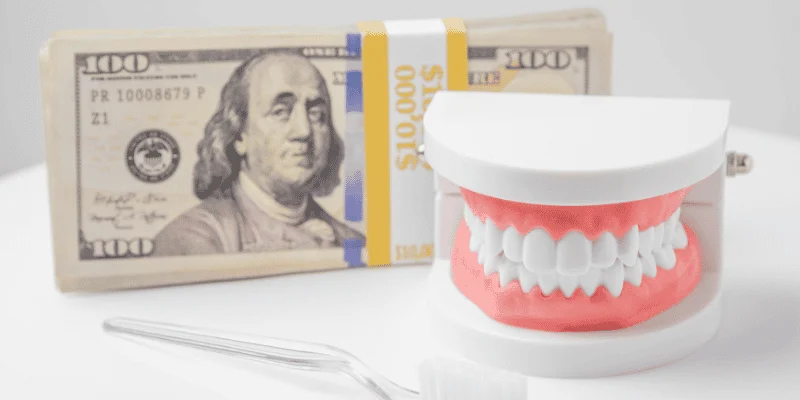
You need to plan for both the upfront all-on-4 cost and the care that keeps your new teeth working for years. Prices vary by location, materials, and follow-up care, so you should review the full picture before you commit.
Cost Factors and Insurance Coverage
The cost of All-on-4 depends on several key factors:
- Your location and clinic fees
- The dentist’s experience
- Type of prosthetic teeth used
- Need for extractions or bone smoothing
- Sedation or anesthesia
- Custom abutments and lab work
In the U.S. and other high-cost regions, the price often ranges from about $15,000 to $28,000 per arch. Some clinics report higher ranges, between $18,000 and $38,000 per arch.
Most dental insurance plans classify implants as major procedures. You may receive partial coverage, but many plans cap annual benefits at $1,000 to $2,000. You should review your policy closely and ask for a pre-treatment estimate.
Financing and Dental Tourism
If the dental implants cost feels high, you have options. Many clinics offer financing options and payment plans through third-party lenders or in-house financing.
Medical credit companies let you spread payments over months or years. Interest rates vary, so you should compare terms before you sign. Some offices also offer discounts for paying in cash upfront.
Dental tourism can lower your out-of-pocket cost. Countries in Latin America, Eastern Europe, and parts of Asia often charge much less than U.S. clinics.
You must factor in travel, lodging, time off work, and follow-up care. If problems occur, returning abroad for repairs may cost more in the long run.
Post-Operative Care and Maintenance
Your long-term results depend on consistent post-operative care and daily habits. After surgery, you will follow a soft food diet and attend several checkups to monitor healing.
You must keep your mouth clean to prevent infection around the implants. Good oral hygiene includes:
- Brushing twice daily with a soft brush
- Using a water flosser to clean under the bridge
- Attending professional cleanings every 3–6 months
Your dentist may need to tighten screws or adjust the prosthesis over time. Abutments and the final bridge can last many years, but they may need repair or replacement due to wear.
With steady care and regular visits, you protect your investment and help your implants stay stable for the long term.
Frequently Asked Questions
You likely want clear facts about the steps, cost, insurance, risks, and how the teeth function day to day. These answers explain what you can expect before, during, and after treatment.
How does the All-on-4 treatment work from start to finish?
Your dentist starts with a full exam, X‑rays, and often a 3D CBCT scan. This scan helps map nerves and bone so the implants can be placed in safe, strong areas.
During surgery, the doctor removes any failing teeth and places four implants in your jaw. Two implants usually go straight in the front. Two in the back tilt at an angle to use more bone and avoid the sinus or nerve.
In many cases, you leave the same day with a fixed temporary bridge.
Over the next 3 to 6 months, the implants fuse with your jawbone. After healing, your dentist replaces the temporary teeth with a final bridge made of zirconia or another strong material.
How much do All-on-4 dental implants typically cost?
The cost depends on where you live, the clinic’s experience, and the materials used. In the United States, one arch often ranges from about $20,000 to $35,000.
This fee usually includes surgery, implants, temporary teeth, and the final bridge. Extra procedures like bone grafts or sedation can raise the total price.
Always ask for a written treatment plan. It should list each part of the process so you understand what you are paying for.
Does dental insurance help cover the cost of All-on-4 implants?
Most dental insurance plans do not cover the full cost of implants. Some plans may pay for part of the exam, extractions, or the denture portion of the bridge.
Medical insurance sometimes helps if tooth loss links to an accident or medical condition. You need to check your specific policy.
Your dental office can send a pre‑treatment estimate to your insurer. This step helps you see what portion, if any, your plan will pay.
What are the main disadvantages or risks of choosing All-on-4 implants?
All-on-4 is surgery, so it carries normal surgical risks. These include infection, swelling, bleeding, and temporary nerve numbness.
Implants can fail if they do not bond with the bone. Smoking, uncontrolled diabetes, and poor oral hygiene raise this risk.
You may also face mechanical issues over time. Screws can loosen, and acrylic teeth can wear down or chip. Regular checkups help catch and fix these problems early.
Are All-on-4 teeth removable, or are they fixed in place?
All-on-4 teeth are fixed in place. Your dentist screws the bridge onto the implants, and only a dental professional can remove it.
You do not take them out at night like traditional dentures. You brush them daily and clean under the bridge with special floss or a water flosser.
This fixed design helps the teeth feel more stable when you chew and speak.
Where can I find the most affordable options for getting All-on-4 implants?
Prices vary widely by country and by clinic. Some patients look at care in other regions where lab and surgical fees cost less.
If you compare options, focus on the dentist’s training, implant brand, and follow‑up care. Low cost should not mean low standards.