

When you lose a tooth, you lose more than part of your smile. You may struggle to chew, speak clearly, or feel confident in photos. That is where an implant dentist’s role becomes essential in restoring your smile and oral function.
An implant dentist restores your smile by placing a dental implant that replaces your missing tooth root and supports a natural-looking crown, helping you regain function and confidence.
You get careful planning, precise placement, and long-term support from a restorative dentistry expert.
You deserve to know how this process works and what to expect at each stage. When you understand your options, you can move forward with clear goals and realistic expectations about your new smile.
Key Takeaways
- You regain function and appearance with a dental implant placed by a trained dentist.
- You receive careful planning, placement, and follow-up care throughout treatment.
- You support long-term smile restoration with proper healing and daily care.
Table of Content
- Understanding Dental Implants and Tooth Replacement
- The Multidisciplinary Dental Team in Implant Dentistry
- Planning and Preparing for Dental Implant Treatment
- Step-by-Step: The Dental Implant Procedure
- Smile Transformation, Recovery, and Implant Care
- Frequently Asked Questions
Understanding Dental Implants and Tooth Replacement
When you lose a tooth, you do more than create a gap in your smile. You change how you chew, how you speak, and how your jaw supports the rest of your teeth.
Dental implants offer a fixed way to replace missing teeth, while dentures and bridges provide other options. Knowing the differences helps you choose the right path for your oral health and daily comfort.
What Are Dental Implants?
Dental implants are small metal posts that a surgeon places into your jawbone. They act as artificial tooth roots and support a crown, bridge, or even dentures.
The process usually involves placing the implant, allowing time for healing, and then attaching the final tooth. During healing, your bone fuses to the implant in a process called osseointegration.
This bond helps keep the implant stable. Once healed, you use it much like a natural tooth.
A complete implant tooth often has three parts:
- Implant post (placed in the jawbone)
- Abutment (connector piece)
- Crown (visible tooth portion)
An implant dentist plans each step based on your bone health and the number of missing teeth.
How Dental Implants Differ from Dentures and Bridges
Dental implants stay fixed in your jaw. Dentures and bridges rely on other structures for support.
A denture rests on your gums and may replace several or all teeth. You can remove most dentures for cleaning. Some people use adhesives to help them stay in place.
A dental bridge fills a gap by attaching to nearby natural teeth. Your dentist shapes those teeth to hold the bridge.
Here is a simple comparison:
| Feature | Dental Implants | Dentures | Bridges |
| Removable | No | Usually yes | No |
| Uses jawbone | Yes | No | No |
| Affects nearby teeth | No | No | Yes |
Implants help stimulate your jawbone because they sit inside it. Dentures and bridges do not replace the tooth root, so they do not provide that same support.
Advantages of Replacing Missing Teeth
Replacing missing teeth protects more than your smile. It supports your overall oral health.
When you leave a gap, nearby teeth can shift. This movement may affect your bite and make cleaning harder. Over time, that can raise your risk of decay and gum disease.
The FDA explains that dental implants are surgically placed into the jaw to support artificial teeth. Because they anchor in bone, they help maintain structure in your mouth.
Tooth replacement can help you:
- Chew food more evenly
- Speak more clearly
- Reduce extra strain on other teeth
- Support long-term oral health
An implant dentist checks your gums, bone level, and medical history before recommending treatment.
Natural Appearance and Oral Function

Many people want a tooth replacement that looks real. Dental implants are designed to support crowns that match the color and shape of your natural teeth.
A dental implant is a metal post that replaces the root of a missing tooth and supports a crown. Because the implant sits under the gum, the visible part looks like a regular tooth.
You can brush and floss around an implant much like you do with natural teeth. Most people find they can eat many of the same foods they enjoyed before tooth loss.
Dentures can restore appearance, but they may shift during speech or meals. Implants stay in place, which can make daily tasks feel more stable and natural.
The Multidisciplinary Dental Team in Implant Dentistry
Dental implants often require more than one provider. You benefit most when each dental professional focuses on a specific part of your care and works together on one clear treatment plan.
Roles of General Dentists and Implant Dentists
Your general dentist often starts the process. They examine your teeth and gums, take X-rays, and check your overall oral health. If you have decay or gum disease, they treat those problems first to create a healthy base for implant dentistry.
An implant dentist focuses on placing and restoring dental implants. They assess your bone levels, plan implant position, and coordinate imaging. Some implant dentists also complete the final crown as part of restorative dentistry.
You may see both providers during your care. The general dentist may handle cleanings and routine care, while the implant dentist manages surgical placement and long-term implant function.
When to See an Oral Surgeon, Periodontist, or Prosthodontist
Some cases require added skill. If you need complex surgery or bone grafting, your dentist may refer you to an oral surgeon. Oral surgeons handle procedures such as extractions, sinus lifts, and advanced implant placement.
A periodontist treats gum disease and manages the bone and soft tissue that support your implant. Healthy gums reduce the risk of implant failure.
This review on a multidisciplinary approach to implants explains why careful assessment across specialties improves success.
A prosthodontist focuses on restoring missing teeth with crowns, bridges, or full-arch prosthetics. If you need multiple implants or a full-mouth restoration, a prosthodontist may design and place your final teeth for proper fit and bite balance.
The Importance of Collaboration in Smile Restoration
Implant dentistry works best when each provider shares clear information. Your X-rays, scans, and treatment goals guide every step. Team members discuss implant position, gum shape, and final crown design before surgery begins.
This teamwork reduces surprises during treatment. It also helps align surgical and restorative steps, which supports long-term comfort and function.
When your dental team plans together, you receive care that protects your bone, supports your bite, and restores your smile in a stable way.
Contact our team to learn how the implant dentist role supports long-term oral health, function, and confidence with modern dental implants.
Planning and Preparing for Dental Implant Treatment
Your implant dentist studies your health, bone structure, and smile goals before placing an implant. Careful exams, imaging, and planning steps help lower risks and improve long‑term results.
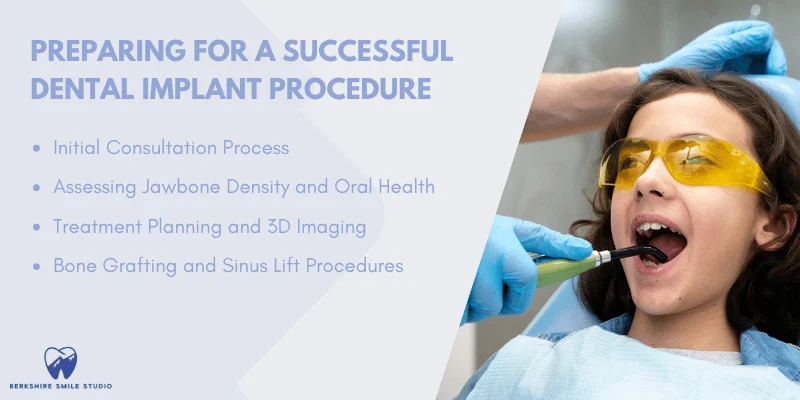
Initial Consultation Process
Your care starts with a detailed initial consultation. You meet with an implant dentist who reviews your medical history, medications, and past dental work.
The dentist examines your teeth, gums, and bite. They check for signs of gum disease, infection, or teeth that may need removal.
You may also discuss your goals. For example, you might want to replace one missing tooth or secure a loose denture.
Many offices explain the full dental implant procedure step by step so you understand what happens before, during, and after surgery.
Before you leave, you often receive a basic timeline and cost estimate. This visit helps you decide if implants fit your needs and health status.
Assessing Jawbone Density and Oral Health
Strong bone supports a stable implant. Your dentist checks your jawbone density to see if it can hold a titanium post securely.
If you lost a tooth years ago, the bone may have shrunk. Bone loss can affect implant placement and long‑term success.
Your dentist also reviews your oral health. Healthy gums lower your risk of infection around the implant.
They look for:
- Gum disease
- Untreated cavities
- Signs of teeth grinding
- Poor oral hygiene habits
If problems exist, you treat them first. For example, you may need a deep cleaning or periodontal care before surgery. Careful planning lowers the risk of complications.
Treatment Planning and 3D Imaging
After your exam, your dentist builds a detailed treatment planning strategy. This plan guides the exact position, angle, and depth of the implant.
Many offices use 3D imaging, such as cone beam CT scans. These images show bone height, width, and nearby nerves.
With 3D scans, your dentist can:
- Measure available bone precisely
- Avoid sinus cavities and nerves
- Plan the final crown before surgery
This approach supports restoration‑driven placement. The implant sits where your future tooth will function best, not just where bone exists.
Digital tools also help create surgical guides. These guides help your dentist place the implant in the exact planned position.
Bone Grafting and Sinus Lift Procedures
If your jawbone lacks volume, your dentist may recommend bone grafting. A graft adds bone material to thin or weak areas.
Your body slowly replaces the graft with natural bone. This process can take several months.
For upper back teeth, your dentist may suggest a sinus lift. The sinus cavity sits close to the upper jaw. If bone height is low, the dentist gently lifts the sinus membrane and places graft material underneath.
You may need these procedures before implant placement. In some cases, your dentist can place the implant at the same time.
These steps create a stronger foundation. A stable base supports healing and long‑term implant success.
Contact our team in Pittsfield, MA to discuss your tooth replacement options and implant care needs.
Step-by-Step: The Dental Implant Procedure
Your implant dentist follows a clear plan to replace your missing tooth. You move through implant surgery, healing, and final restoration in stages so your jawbone can support the new tooth for the long term.
Implant Surgery and Placement
Your dental implant procedure starts with careful planning. Your dentist checks your gums and jawbone and takes detailed images to map out exact implant placement.
During implant surgery, your dentist numbs the area. In some cases, you may choose the sedation option to help you relax.
Your dentist then makes a small opening in your gum and prepares the bone. They place the implant, a small titanium post, into the jawbone. This post acts as the new tooth root.
After the implant is in place, your dentist may attach a healing cap or cover the site with gum tissue. You go home the same day. Mild swelling, minor bleeding, and soreness are common for a few days.
Understanding Osseointegration
After implant placement, your body begins a process called osseointegration. This is when your jawbone grows around the implant and locks it in place.
Osseointegration is what makes dental implants stable. Without it, the implant would not be strong enough to support a crown.
This stage usually takes 2 to 6 months. The exact time depends on your bone quality, overall health, and whether you need a bone graft.
During this time, you must keep the area clean. Brush gently, follow your dentist’s instructions, and attend follow-up visits so they can check healing.
Your implant dentist monitors the bone and gum tissue closely. Once the implant feels firm and secure, you move to the next phase.
Temporary Solutions During Healing
You do not have to walk around with a visible gap while you heal. Your dentist can provide a temporary solution to protect the site and maintain your smile.
Options may include:
- A temporary crown
- A removable partial denture
- A temporary bridge
In some cases, your dentist may place a temporary crown right after implant surgery. Not everyone qualifies for this option, especially if the implant needs more time to bond with the bone.
Temporary restorations protect the implant area from pressure. They also help shape the gum tissue so it looks natural around the final restoration.
You should avoid chewing hard foods on the implant side during this stage.
Final Restoration and Aesthetic Outcomes
Once osseointegration is complete, your dentist attaches an abutment. This small connector links the implant to your final restoration.
Your dentist then takes impressions or digital scans of your mouth. A dental lab uses this model to create a custom crown that matches your other teeth in size, shape, and color.
The final restoration is secured to the abutment, either with dental cement or a small screw.
Your new tooth should feel stable and fit comfortably when you bite. With good care, brushing, flossing, and regular checkups, your implant can function like a natural tooth for many years.
Smile Transformation, Recovery, and Implant Care
Your smile restoration does not end when the implant is placed. You need to understand healing, daily care, and how implants compare with braces or other tooth movement options so you can protect your investment and your oral health.
Post-Operative Healing and Expected Outcomes
After implant surgery, your body needs time to heal and bond the implant to your jawbone. This bonding process, called osseointegration, creates a stable base for your new tooth.
You may notice mild swelling, soreness, or light bleeding for a few days. Your dentist may suggest soft foods, cold compresses, and pain medicine to control discomfort.
Healing times vary. If you need a bone graft, healing can take several months before the implant fully fuses with bone.
You can expect your final crown to look and feel like a natural tooth. Once healed, you should chew, speak, and smile with confidence.
Maintaining Oral Health After Implants
Implants replace missing teeth, but they still require daily care. You must treat them like natural teeth.
Brush twice a day with a soft toothbrush. Floss daily, and clean around the implant crown carefully to remove plaque.
Regular dental visits matter. During checkups, your dentist checks your gums, bite, and the stability of the implant. Consistent follow-up supports long-term success.
Call your dentist if you notice pain, swelling, or bleeding gums. Early treatment protects your oral health and helps prevent implant failure.
Implant Care and Longevity

Strong implant care habits protect your smile restoration for many years. Poor hygiene can lead to gum inflammation around the implant, called peri-implantitis.
Focus on these daily steps:
- Brush along the gumline.
- Floss or use interdental brushes to clean tight spaces.
- Avoid smoking, which slows healing and weakens gum health.
- Wear a nightguard if you grind your teeth.
Your overall health also affects healing and long-term results. Conditions like uncontrolled diabetes can slow recovery and affect how well the implant bonds to bone.
When you follow your dentist’s instructions and keep your gums healthy, implants can serve as a stable and lasting way to replace missing teeth.
Comparing Implants with Braces and Tooth Movement Options
Dental implants and braces solve different problems. Implants replace missing teeth. Braces and clear aligners move existing teeth into better positions.
If you lost a tooth, braces alone cannot fill the gap. You need an implant, bridge, or other replacement option.
However, your dentist may suggest braces before implant placement. Tooth movement can create proper spacing and improve your bite, which helps the final crown fit correctly.
An implant dentist often works with an orthodontist during a full smile restoration. Together, they plan the right order of treatment so your teeth align well and your implant stays stable.
By understanding these differences, you can choose the right path for your goals and protect your long-term oral health.
Frequently Asked Questions
You may wonder who places the implant, how long treatment takes, and if health issues affect your results. Clear answers help you plan each step, from your first visit to your final crown.
What does an implant dentist do during a smile restoration treatment?
Your implant dentist plans and places the implant that acts like a tooth root. The implant is a small post, often made of titanium or ceramic, that supports a new tooth.
They surgically place the post into your jawbone. After healing, they attach a connector called an abutment and secure a custom crown on top.
Your dentist also checks your bite, gum health, and bone levels. They work with other dental specialists when needed to make sure your final teeth look natural and function well.
Am I a good candidate for dental implants, and what factors could disqualify me?
You may qualify if you have healthy gums and enough jawbone to support the implant. Good oral hygiene and regular dental visits also matter.
Certain issues can delay or prevent treatment. These include severe bone loss, uncontrolled diabetes, heavy smoking, or active gum disease.
Your dentist will review your medical history and take X-rays or 3D scans. During an implant dentist consultation and exam, you can discuss risks, costs, and expected results.
Can someone with lupus safely get dental implants, and what extra precautions are needed?
You can sometimes get dental implants if you have lupus, but your condition must stay stable. Your dentist will want to know about flare-ups, medications, and your immune system status.
Some lupus medications can slow healing or increase infection risk. Your dentist may speak with your physician before surgery.
You may need extra follow-up visits and strict home care. Careful planning and close monitoring reduce problems during healing.
What should I know or prepare for before starting the dental implant process?
Expect a full exam, X-rays, and possibly a 3D scan. Your dentist will review your medical history and current medications.
You should stop smoking if you smoke. Smoking slows healing and raises the risk of implant failure. Plan for healing time between steps. Many patients have questions about recovery and maintenance.
What is the “two-year rule” in dentistry, and does it affect implant timing or eligibility?
The “two-year rule” often refers to waiting about two years after cancer treatment before certain dental procedures. This guideline helps reduce the risk of bone problems in patients who had radiation therapy to the jaw.
It does not apply to everyone. If you had radiation, chemotherapy, or certain bone medications, your dentist will review your records before placing implants.
Your eligibility depends on your current health, not just the amount of time that has passed. A detailed exam will guide the final decision.
How long does the dental implant process take from consultation to final teeth, and what are the main steps?
The full process often takes several months. After the implant is placed, your jawbone needs time to heal and fuse to the post. This healing phase usually lasts about 4 to 6 months before your dentist places the final restoration.
The main steps include consultation, imaging, implant placement, healing, abutment placement, and crown delivery. Some cases move faster, while others need bone grafting or extra healing time.