

You’ve probably heard plenty of teeth whitening myths, from claims that lemon juice can brighten teeth to promises that charcoal toothpaste can erase years of stains overnight.
Maybe a friend swore lemon juice worked wonders, or a video promised charcoal toothpaste would erase years of coffee stains overnight. Some of what circulates has a grain of truth. Most of it doesn’t.
Teeth whitening, when done with the right products and guidance, does not damage healthy enamel, but plenty of the shortcuts people try instead can cause real harm.
The confusion usually comes down to mixing up sensitivity with damage, or expecting a whiter smile from teeth that have crowns, fillings, or deep internal stains that whitening simply can’t touch.
This gets sorted out by looking at what whitening agents actually do at a chemical level, how store-bought options stack up against professional treatment, and why your own dental history plays a bigger role in your results than any product label does.
Key Takeaways
- Whitening products break down stain molecules through oxidation; they don’t strip or thin your enamel when used correctly.
- Surface stains respond well to whitening, but intrinsic stains and dental work like crowns or veneers won’t change color.
- A dental checkup before whitening helps you avoid wasted money and unnecessary sensitivity if cavities or gum issues are present.
Does Teeth Whitening Damage Enamel?
Properly used whitening products do not damage your tooth enamel.
The active ingredients target stain molecules through oxidation, not the enamel structure itself, and dental research examining enamel at a microscopic level consistently finds no structural harm when products are used as directed.
Why Properly Used Whitening Agents Do Not Strip Tooth Enamel
Tooth enamel is the hard outer layer protecting the softer, yellower dentin underneath.
Staining happens when pigment from food and drinks settles into that outer layer over time.
Hydrogen peroxide and carbamide peroxide, the two most common whitening agents, break apart those stain molecules through oxidation.
They disperse the pigment rather than dissolving or thinning the enamel itself.
When Overuse Can Cause Tooth Sensitivity and Gum Irritation
Overdoing it is where problems start. Whitening ingredients temporarily open tiny channels in your teeth called dentinal tubules, which can bring on tooth sensitivity to hot, cold, or pressure.
This discomfort feels alarming, but it’s temporary and usually fades within a day or two once treatment stops.
Gum irritation can happen too, often from a whitening tray or strip that doesn’t fit well and lets gel touch soft tissue.
Stretching sessions longer than recommended, or repeating treatment without a break, raises your risk for both issues.
How Dentists Help Protect Enamel During Treatment
Dental professionals customize whitening strength and timing based on your enamel condition and sensitivity history.
At Berkshire Smile Studio, that means checking for thin enamel, exposed dentin, or existing dental work before recommending a concentration or schedule.
Properly fitted trays and professionally selected whitening concentrations can help reduce unnecessary exposure to the gums and limit temporary side effects such as sensitivity and irritation.
Do Store-Bought Products Work as Well as Professional Whitening?
Store-bought whitening products can lighten surface stains, but they rarely match the depth or speed of professional whitening treatment.
Whitening toothpaste, strips, and gels use lower concentrations of bleaching agents than what a dentist can apply, which means slower, more modest results.
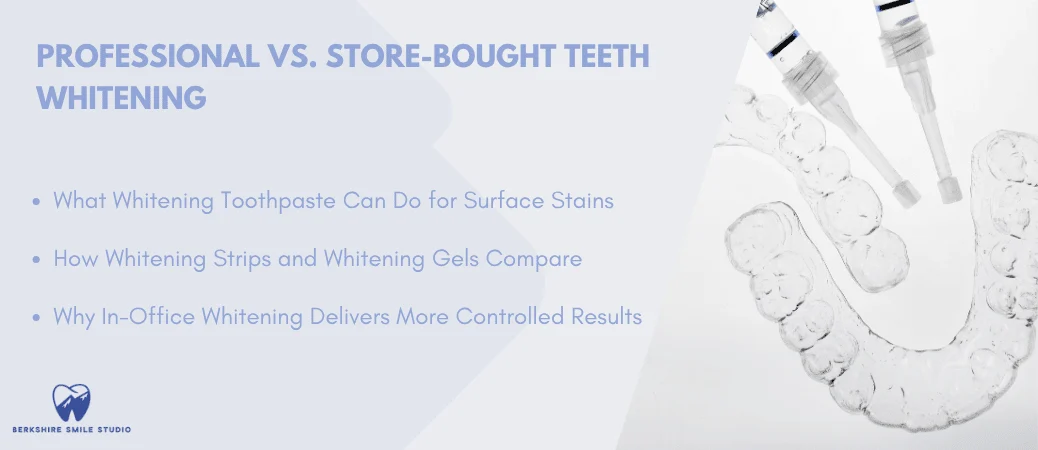
What Whitening Toothpaste Can Do for Surface Stains
Whitening toothpaste works mainly through mild abrasives and low-level whitening agents that lift surface stains from coffee, tea, or wine. It won’t reach stains sitting deeper in the tooth.
Think of it as maintenance rather than a fix. It can help preserve results after a professional whitening treatment, but expecting it to brighten your smile on its own sets you up for disappointment.
How Whitening Strips and Whitening Gels Compare
Whitening strips and whitening gels sit further up the effectiveness scale than toothpaste because they hold peroxide against your teeth longer.
Strips are pre-measured and simple to apply, while gels often come with trays that allow more even coverage.
Both options use over-the-counter concentrations that are weaker than what dental offices use, so results build gradually over weeks instead of a single visit.
| Feature | Whitening Toothpaste | Strips/Gels (OTC) | In-Office Whitening |
| Peroxide strength | Very low | Low to moderate | High, professionally controlled |
| Time to visible results | Weeks | 1-2 weeks | Same day |
| Best for | Surface polish | Mild to moderate stains | Deeper, stubborn stains |
| Supervision | None | None | Dentist-supervised |
Why In-Office Whitening Delivers More Controlled Results
In-office whitening delivers faster, more even results because dentists use higher-concentration bleaching agents under controlled conditions.
Your gums get protected with a barrier, and the whitening gel strength gets adjusted to your enamel and sensitivity level.
This kind of professional whitening treatment also lets your dentist catch issues, like a cracked tooth or old filling, that could affect how evenly your teeth whiten.
Comparing professional teeth whitening against home kits side by side often comes down to how quickly you want results and how much oversight you want during treatment.
Are Natural Teeth Whitening Remedies Actually Safe?
Many natural teeth whitening remedies promoted online are not backed by dental research, and some can actively harm your enamel.
A handful of home approaches have mild, evidence-supported benefits, but most social-media “hacks” fall short of their promises or carry real risk.
Why Lemon Juice Can Lead to Enamel Erosion
Lemon juice is acidic enough to wear down enamel with repeated use. It doesn’t whiten teeth; it just makes the surface slightly rougher, which can actually make future staining worse.
Enamel erosion from acidic exposure is permanent, unlike the temporary sensitivity that comes from proper whitening. Once enamel wears thin, it doesn’t grow back.
What Baking Soda and Charcoal Toothpaste Really Remove
Baking soda has some legitimate stain-lifting ability because of its mild abrasive texture. Used occasionally and gently, it can help with surface stains.
Activated charcoal toothpaste is a different story. Its abrasiveness varies a lot by brand, and rougher formulas can wear down enamel over time without delivering the deep whitening many buyers expect.
Why Hydrogen Peroxide Rinses and DIY Bleaching Need Caution
Diluted hydrogen peroxide rinses have some support as a mild whitening aid, but concentration matters. Mixing your own stronger solutions at home risks chemical burns to gums and unpredictable results.
DIY bleaching kits bought online, without dentist oversight, skip the safety checks that catch cavities or gum disease before treatment starts.
Whitening over untreated tooth decay can mask the problem while doing nothing to fix it, letting cavities progress unnoticed.
Who Will Get the Best Whitening Results?
The best whitening results come from healthy teeth with surface stains and no major dental work on the front teeth. Your stain type, oral health, and dental history all shape how much brightness you can realistically expect.

Surface Stains vs. Intrinsic Stains
Surface stains sit on top of the enamel and come from coffee, tea, wine, or smoking. These respond well to both store-bought and professional whitening.
Intrinsic stains sit deeper, inside the tooth structure itself, often from childhood antibiotic use, aging, or trauma to a tooth.
Whitening products can lighten these somewhat, but rarely to the same degree as surface stains, and very dark intrinsic stains may need a cosmetic option like porcelain veneers instead.
Why Crowns, Veneers, and Fillings Will Not Whiten
Crowns, veneers, and fillings are made from ceramic or composite materials that don’t respond to bleaching agents at all.
Whitening will brighten your natural teeth around them, which can leave visible dental restorations looking mismatched in shade.
If whitening alone cannot create the change you want, other cosmetic dentistry options may help address differences in tooth color, shape, or existing restorations.
If you have visible dental work on your front teeth, it’s worth talking to your dentist before whitening so you know what to expect.
In some cases, a smile makeover that addresses crowns, veneers, and whitening together creates a more even result than whitening alone.
When Gum Disease, Cavities, or Sensitivity Should Be Treated First
Gum disease, cavities, and existing tooth sensitivity should get treated before you start any whitening plan.
Whitening agents can irritate inflamed gums and cause sharp discomfort in teeth with untreated decay or exposed roots.
A dental checkup catches these issues early. Addressing them first also means your whitening results will look better, since healthy gums and teeth respond more evenly to treatment.
How Long a Brighter Smile Can Last
A whiter smile can last anywhere from several months to a few years, depending on your diet, oral hygiene, and whether you smoke.
Staining foods and drinks like coffee, red wine, and tobacco speed up the return of discoloration.
How long whitening results last depends on your diet, oral hygiene, tobacco use, and the type of treatment you receive.
Periodic touch-ups may help maintain results, but the timing should depend on the whitening method, your sensitivity, and your dentist’s recommendations.
A Safer Path to a Brighter Smile

A dental checkup before whitening is the safest first step, since it confirms your oral health can handle treatment and helps you choose the right strength of product.
Good oral hygiene between whitening sessions, including regular dental cleanings and daily brushing, can help limit new surface stain buildup.
If sensitivity is a concern, ask about desensitizing gel before or after treatment.
Many dental offices apply desensitizing gels as part of a professional whitening treatment specifically to ease that temporary tooth discomfort.
Berkshire Smile Studio builds this kind of checkup into every whitening consultation, checking for cavities, gum health, and existing dental work before recommending a plan.
That step alone prevents most of the disappointment people run into with rushed, unsupervised whitening.
Consistent care between treatments matters more than any single whitening session.
Brushing twice a day, keeping up with dental checkups, and cutting back on staining foods and drinks stretch your results out much longer than skipping straight to another round of whitening strips.
Frequently Asked Questions
What is scientifically proven to whiten teeth?
Hydrogen peroxide and carbamide peroxide are the two ingredients with the strongest scientific backing for whitening teeth.
Both work by oxidizing stain molecules within the enamel, and dentists use them in professional whitening treatments at controlled, higher concentrations than what’s available in stores.
Why do dentists say not to use whitening toothpaste too often?
Whitening toothpaste contains mild abrasives that can wear down enamel with frequent, heavy-handed use over time.
Dentists usually recommend using it a few times a week rather than at every brushing, especially if you already deal with sensitivity.
Can teeth whitening permanently damage enamel?
Properly used whitening products do not permanently damage enamel, since the process targets stain molecules rather than the enamel structure itself.
Overuse, low-quality products, or whitening over pre-existing enamel erosion are the situations where lasting problems can develop.
Can I whiten crowns, veneers, and fillings?
No, crowns, veneers, and fillings do not respond to whitening agents because they’re made from ceramic or composite materials, not natural tooth enamel.
Whitening will only lighten your natural teeth, which can leave restorations looking a different shade than the teeth around them.
How can I whiten my teeth without causing sensitivity?
Choosing a lower-concentration whitening product and following the recommended treatment schedule lowers your risk of tooth sensitivity.
Using a desensitizing gel before or after sessions, and spacing out treatments rather than whitening back-to-back, also helps keep discomfort manageable.