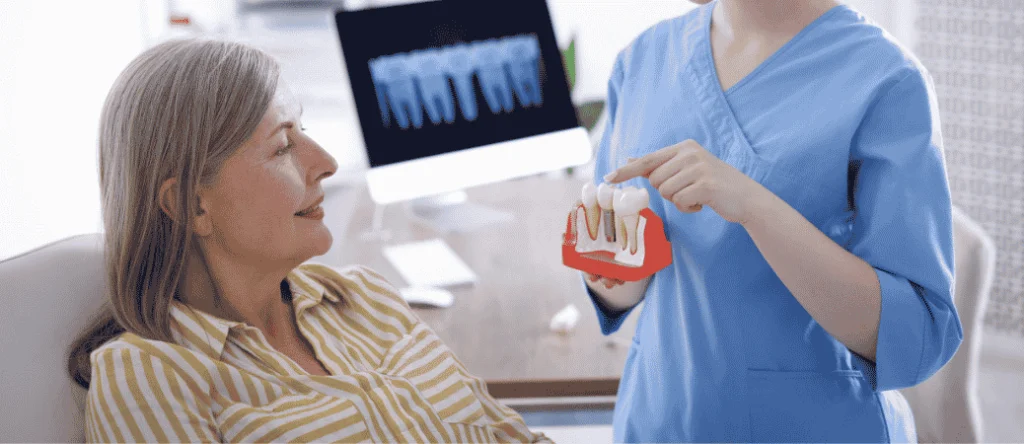


Missing teeth can affect how you eat, speak, and feel about your smile. When it’s time to replace them, you’ll likely face a choice between two popular options: dental implants and dentures. Both can restore your smile, but they work in very different ways.
Dental implants are permanent replacements that include screws placed into your jawbone, while dentures are removable false teeth that sit on top of your gums.
Most dentists recommend implants when possible because they look and function more like natural teeth. However, dentures cost much less than dental implants, making them a practical choice for many people.
The right option for you depends on your budget, oral health, and personal needs. Understanding how dental implants compare to dentures will help you make the best decision for your situation.
Key Takeaways
- Dental implants are permanent and support jawbone health but cost more and require surgery
- Dentures are affordable removable false teeth that need replacement every few years
- Your best choice depends on your budget, bone health, and how many teeth you need to replace
Understanding Dental Implants and Dentures
Dental implants are artificial tooth roots surgically placed into your jawbone, while dentures are removable appliances that replace missing teeth. Both options restore your ability to eat and smile, but they work in different ways.
What Are Dental Implants?
Dental implants are small titanium posts that your dentist surgically places into your jawbone. They act as replacement tooth roots and bond with your bone over time.
Once the implant heals, your dentist attaches a crown on top that looks and works like a natural tooth. You can also use multiple implants to support bridges or even full sets of replacement teeth.
The implant post stimulates your jawbone just like natural tooth roots do. This prevents bone loss that typically happens when you lose teeth.
Dental implants have a high success rate of over 97% for 10 years, making them a reliable long-term solution for many patients. They can last a lifetime with proper care, making them a long-term solution.
What Are Dentures?
Dentures are removable appliances that replace your missing teeth. They consist of artificial teeth attached to a gum-colored base made of acrylic or other materials.
You take dentures out of your mouth for cleaning and while you sleep. They rest on your gums and stay in place through suction or adhesive.
Dentures are less invasive than implant surgery and don’t require the same healing time. Your dentist can make them relatively quickly, allowing you to restore your smile faster.
Types of Dentures and Implant-Supported Options
Alt text: types-of-dentures-and-implant-supported-options
Partial dentures replace some of your missing teeth when you still have natural teeth remaining. They clip onto your existing teeth with metal clasps.
Complete dentures replace all of your teeth on the upper or lower jaw. You need these when you’ve lost all your teeth in one or both arches.
Implant-supported dentures combine both technologies. Your dentist places several implants in your jaw, then attaches dentures to them.
This option gives you more stability than traditional dentures while avoiding the discomfort of removable dentures that can shift or slip.
Key Differences Between Dental Implants and Dentures
The biggest differences between implants and dentures come down to how they’re placed, how long they last, and how you take care of them. Implants require surgery and become permanent fixtures in your jaw, while removable dentures sit on top of your gums.
Procedure and Placement
When you choose dental implants, you’ll need implant surgery to place titanium screws into your jawbone. Your dentist drills into the bone and inserts the implant post, which replaces your natural tooth root.
The process can take several months because the implant needs time to fuse with your jawbone before the final crown is attached.
You might need extra procedures like a bone graft if your jaw doesn’t have enough bone for proper implant placement. This adds more time and cost to your treatment.
Dentures work completely differently. Your dentist takes impressions of your mouth and creates custom-fit artificial teeth attached to a plate. The whole process is much faster and doesn’t require any surgery.
You can get your dentures within a few weeks and start wearing them right away. The trade-off is that dentures don’t replace your tooth roots, so they just rest on your gums instead of anchoring into your jaw.
Longevity and Durability
Dental implants can last years or even a lifetime if you maintain good oral health. The titanium post becomes a permanent part of your jaw and won’t wear down like natural teeth. Your implant crown might need replacement after 10 to 15 years, but the implant itself stays put.
Traditional dentures typically last 5 to 7 years before you need a new set. They’re more prone to cracks and general wear from daily use.
Your jawbone changes shape over time without tooth roots, which makes your dentures loose and uncomfortable. When this happens, you’ll need denture adhesive or a completely new set to get a proper fit again.
Maintenance and Care
You care for implants just like natural teeth. Brush twice daily, floss once a day, and visit your dentist for regular checkups. No special cleaning routine is needed.
Dentures require more work. You need to remove them every night and soak them in a cleaning solution. Brush them separately with special denture cleaner, not regular toothpaste.
You also need to clean your gums and any remaining natural teeth before putting your dentures back in each morning.
Learn more about which option is right for you in Berkshire County. Book a consultation today to explore your best tooth replacement option!
Functionality, Comfort, and Aesthetics
Dental implants and dentures differ greatly in how they work in your mouth, how they feel during daily activities, and how natural they look when you smile. These differences affect your ability to eat, speak clearly, and feel good about your appearance.

Bite Strength and Chewing Ability
Dental implants provide much better bite strength than dentures. They work like natural teeth because they integrate directly into your jawbone, restoring a significant portion of the bite strength you had with your natural teeth.
With implants, you can eat foods that denture wearers often avoid. Hard foods like apples, corn on the cob, and nuts are easy to manage, and sticky foods like caramel or chewy bread won’t cause problems either.
Complete dentures provide about 11% of the maximum bite force compared to individuals with natural teeth. They rest on top of your gums and can slip when you chew.
Many people with dentures need to cut food into smaller pieces or avoid certain foods completely, affecting their quality of life and limiting food choices at restaurants or family gatherings.
Speech and Everyday Comfort
Your speech sounds more natural with dental implants. They stay firmly in place and don’t affect how your tongue moves when you talk. You won’t develop a lisp or clicking sounds that can happen with loose dentures.
Dental implants eliminate discomfort associated with removable dentures, which can shift or slip during eating or speaking. Dentures sometimes move around in your mouth, causing sore spots on your gums.
You might need adhesives to keep them in place, which adds extra steps to your daily routine.
Implants feel like your own teeth after you get used to them. You don’t need to remove them for cleaning at night. Dentures require daily removal and soaking, which some people find embarrassing or inconvenient.
Appearance and Confident Smile
Dental implants look the most like natural teeth. Each artificial tooth is custom-made to match your other teeth in color, shape, and size. No one can tell the difference between implants and your real teeth when you smile or talk.
Enhanced confidence comes from implants because they stay securely anchored in your jaw. You can laugh, eat, and talk without worrying about your teeth coming loose or making clicking noises.
Modern dentures have improved in appearance, but they still don’t look as natural as implants. The pink base that mimics gums can sometimes be visible when you smile widely.
Dentures can also change the shape of your face over time because they don’t prevent bone loss in your jaw.
Oral Health, Bone Health, and Long-Term Effects
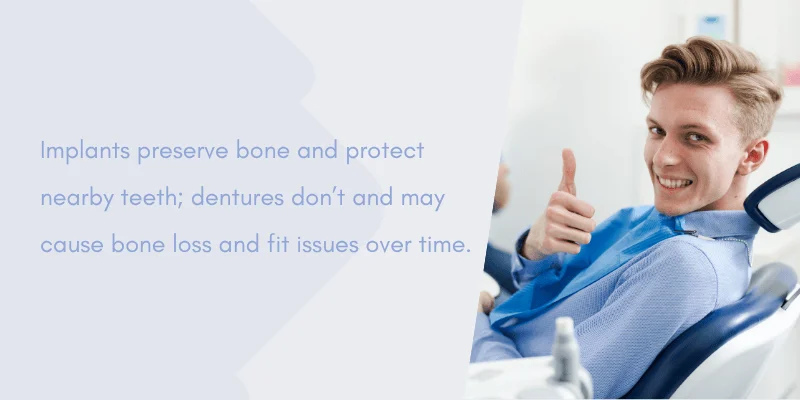
Your jawbone needs stimulation to stay healthy and strong. Dental implants provide this through osseointegration, while dentures sit on top of your gums without engaging the bone below.
Jawbone Preservation and Bone Density
Dental implants act like natural tooth roots. They fuse directly with your jawbone through a process called osseointegration. This fusion creates a strong bond that stimulates the bone when you chew and bite.
The stimulation keeps your jawbone healthy and maintains its density. Implants help prevent bone loss by replacing the missing tooth root and actively engaging the bone tissue. Without this stimulation, your jawbone begins to shrink.
Dentures work differently. They rest on your gums and don’t reach the jawbone. This means they can’t provide the stimulation your bone needs to stay strong.
If you don’t have enough bone for an implant, your dentist might recommend a bone graft. This procedure adds bone material to strengthen your jaw before placing the implant.
Impact on Adjacent Teeth and Gums
Your choice affects more than just the missing tooth area. Dental implants stand alone and don’t require changes to nearby teeth. They support themselves through the jawbone connection.
Dentures can put pressure on your gums and any remaining teeth. Poorly fitting dentures may cause sore spots, irritation, or inflammation in your mouth. You need regular dental visits to check the fit and prevent these problems.
Implants deliver decades of service while preserving bone and adjacent teeth. They keep your other teeth in their proper positions because they fill the gap completely.
Risks of Bone Resorption
Bone resorption happens when your jawbone starts to break down and shrink. This process often starts within months after you lose a tooth.
Dentures don’t stop bone resorption. Your jawbone continues to shrink over time because it’s not getting the stimulation it needs. This shrinking changes the shape of your jaw and face.
As your jaw changes shape, your dentures stop fitting properly. You’ll need adjustments or new dentures every five to ten years. The bone loss can also make your face look sunken or older than you are.
Dental implants provide a long-term solution with superior stability and oral health benefits by preventing this bone loss. The implant keeps your jawbone active and healthy for years to come.
Candidacy, Costs, and Choosing the Right Option
Your health status, budget, and willingness to undergo surgery all play important roles in determining whether dental implants or dentures work best for your situation.
The upfront costs differ significantly, but the long-term value of each option tells a different story.
Health Requirements and Suitability
Dentures work for almost anyone with missing teeth. You don’t need surgery to get them, which makes them a good choice if you have health conditions that prevent surgical procedures.
Your dentist takes impressions of your gums and creates custom dentures that fit your mouth.
Dental implants require adequate jawbone density to support the titanium posts. If you’ve had tooth loss for a long time, you might have experienced bone loss that makes traditional implants challenging.
However, advanced implant techniques like zygomatic implants can work even with severe bone loss. You’ll need healthy gums and good overall health to heal properly after the surgical procedure.
Some medical conditions like uncontrolled diabetes or active gum disease may require treatment before you can get implants. Your dentist will evaluate your specific situation to determine if you’re a candidate.
Treatment Timeline and Invasiveness
Getting dentures is a non-invasive procedure that takes several weeks from start to finish. Your dentist makes impressions, creates a preliminary set, and adjusts them before making your final dentures.
You can start wearing them right away once they’re ready.
Dental implants involve oral surgery and a longer healing period. The titanium posts need several months to integrate with your jawbone before your permanent teeth attach.
While the process takes more time, many patients find the results worth the wait. Some dental offices offer same-day temporary teeth so you don’t go without a smile during healing.
Cost Considerations and Long-Term Investment

Complete dentures cost between $1,000 and $3,000 per arch, making them more affordable upfront. However, they need replacement every 5 to 7 years. You’ll also spend money on adhesives, cleaning solutions, and periodic adjustments.
A single dental implant typically costs $3,000 to $7,000. Full-arch implant solutions range from $18,000 to $35,000 per arch. While this seems expensive, implants can last 20 years or longer with proper care.
Over 20 years, you might spend $3,000 to $5,000 on denture replacements and maintenance.
Dental implants often become more cost-effective when you calculate the cost per year of use, and they typically provide better quality of life with improved eating ability and confidence.
Contact us today for a consultation in Berkshire County to discuss financing options and make an informed decision about your long-term smile investment!
Conclusion and Next Steps
Choosing between dental implants and dentures depends on your personal needs, budget, and health situation. Both options can restore your smile and help you eat and speak more comfortably.
Consider these factors when making your decision:
- Your overall dental health and bone density
- How much you can spend upfront and over time
- Whether you want a permanent or removable solution
- Your comfort level with dental surgery
- How important a natural look and feel is to you
The best way to move forward is to schedule a consultation with your dentist. They can examine your mouth and jawbone to see which option works for you. Your dentist will also explain the specific costs and timeline for your situation.
Don’t rush this decision. Take time to ask questions about both dental implants and dentures during your appointment. You might want to get a second opinion if you’re still unsure.
Many dental offices offer payment plans to make treatment more affordable. Ask about financing options when you call to schedule your visit.
Remember that doing nothing can lead to more problems down the road. Missing teeth can cause your jawbone to shrink and affect your remaining teeth. Taking action now will help protect your oral health for years to come.
Your smile matters, and the right tooth replacement option is out there for you.
Frequently Asked Questions
Patients often have specific questions about costs, suitability for different age groups, and alternative options when deciding between implants and dentures.
Understanding snap-in dentures, bridge alternatives, and reasons why implants might not work for everyone helps you make a more informed choice.
What are the cost differences between dental implants and dentures?
Dentures cost much less than dental implants upfront. A full set of upper and lower dentures typically ranges from $800 to $1,500.
Dental implants are significantly more expensive. A single tooth implant costs between $1,500 and $6,000, and replacing a full mouth can start around $40,000.
However, implants often last a lifetime with proper care. Dentures need replacement every five years or so, which adds to their long-term cost.
Can you explain the advantages and disadvantages of dentures compared to dental implants?
Dentures offer several benefits including lower cost, no surgery requirement, and a faster treatment process. They look good and help prevent your mouth from sagging inward.
The downsides include periodic replacement needs, potential looseness over time, and difficulty eating certain foods. Dentures don’t stop your jawbone from deteriorating since they don’t replace tooth roots.
Implants look natural, support bone health, and provide total stability for eating and speaking. They can last a lifetime once they fuse to your jawbone.
The main disadvantages are high cost, required surgery, and a lengthy treatment process that can take up to a year. You might also need additional procedures like bone grafts.
Are dental implants a suitable option for elderly patients, or are dentures better?
Age alone doesn’t determine whether you’re a good candidate for implants. Your overall health, bone density, and ability to heal matter more than your actual age.
Elderly patients with good bone structure and general health can successfully get dental implants. The surgery is done under local anesthesia and causes minimal discomfort.
Dentures might be better for elderly patients with certain health conditions, limited bone density, or those who can’t undergo surgery. They’re also more practical if budget is a major concern.
Your dentist will evaluate your specific situation to recommend the best option for your needs.
How do snap-in dentures differ from traditional dental implants?
Snap-in dentures combine features of both dentures and implants. They use four to six implants per jaw to anchor the dentures in place.
Unlike traditional dentures that sit on your gums, snap-in dentures attach to implants for better stability. You remove them at night for cleaning, just like regular dentures.
Traditional dental implants are permanent and replace each tooth individually with a screw, abutment, and crown. They’re securely anchored into your jawbone and never come out.
Snap-in dentures cost less than full mouth implants but more than traditional dentures. They typically range from $6,000 to $30,000.
Why might a dentist advise against the use of dental implants for some patients?
Some patients lack sufficient jawbone density to support implants. Your bone needs to be thick and strong enough to hold the implant screw securely.
Certain health conditions make implant surgery risky or prevent proper healing. Uncontrolled diabetes, active gum disease, or immune system disorders can lead to implant failure.
Heavy smokers face higher failure rates because smoking interferes with healing and bone integration. Some patients taking medications for osteoporosis also aren’t good candidates.
Budget constraints are another valid reason to choose dentures instead. Not everyone can afford the significant upfront cost of implants, even though they last longer.
What are the major considerations when choosing between a dental implant and a bridge?
A dental bridge requires grinding down the healthy teeth on both sides of the gap to serve as anchors. This permanently damages those teeth even though they’re healthy.
An implant replaces just the missing tooth without affecting neighboring teeth. It also replaces the tooth root, which helps maintain your jawbone structure.
Bridges typically last 10 to 15 years before needing replacement. Implants can last a lifetime with proper care and good oral hygiene.
Cost differs significantly between the two options. Bridges usually cost less upfront but may need replacement over time, while implants have higher initial costs but rarely need replacing.