
If you are missing most of your teeth, or your remaining teeth are failing, you have probably wondered what comes next. Removable dentures are one path, but they are not the only one.
Most people who are missing all or nearly all of their teeth in an arch are good candidates for All-on-4 implants, as long as they have enough healthy jawbone, stable gums, and a health history that supports healing after surgery.
The technique replaces a full arch of teeth with four strategically placed implants that bond with your jawbone instead of resting on your gums.
Here is the part that surprises many people: bone loss alone does not rule you out. Because the back implants are tilted at an angle of up to 45 degrees to reach denser bone, many patients skip bone grafting entirely.
Below, you will learn what dentists actually check during an implant consultation, which health and lifestyle factors matter, and what questions to ask before you commit.
Key Takeaways
- Full-arch treatment works best for people with widespread missing or failing teeth who want a fixed replacement.
- Enough jawbone, healthy gums, and good daily oral hygiene are the main requirements for stable implants.
- Conditions like uncontrolled diabetes or heavy smoking can slow healing, so a 3D scan and health review come first.
Who Benefits Most From Full-Arch Treatment
All-on-4 works best when most or all of the teeth in an upper or lower jaw are gone, breaking down, or already being replaced by a denture you don’t enjoy wearing.
If you still have a healthy set of natural teeth, a smaller fix usually makes more sense.
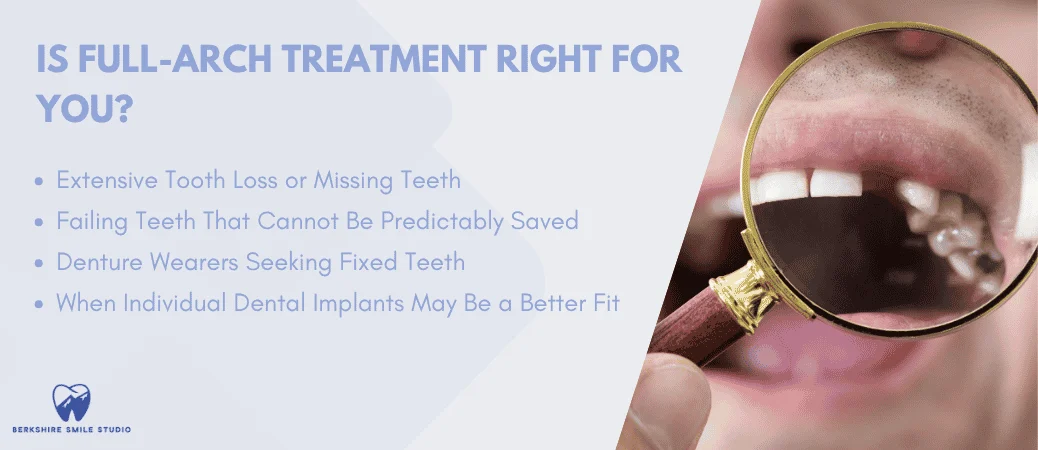
Extensive Tooth Loss or Missing Teeth
The strongest candidates are people who are missing all the teeth on one arch, or close to it.
Long stretches of missing teeth change more than your smile. Chewing gets harder, speech can shift, and the jawbone slowly shrinks because nothing is stimulating it anymore.
That bone loss also reduces the facial support that keeps your cheeks and lips looking full.
Four implants per arch can carry a full set of prosthetic teeth and keep working the bone.
Even if you’ve already lost bone height, the two back implants are tilted to reach denser bone, which often means no bone graft is needed.
Failing Teeth That Cannot Be Predictably Saved
Sometimes teeth are still in your mouth but can’t be counted on much longer. Advanced gum disease, deep decay, cracked roots, or teeth that have failed several root canals fall into this group.
Rebuilding each one with crowns, grafts, and repeat treatment can cost thousands and still end with an extraction a few years later.
A full-arch restoration replaces the whole set at once, so you’re not paying twice for the same tooth.
That’s why All-on-4 is often recommended for teeth damaged beyond repair rather than as a patch for one or two problem spots.
Your dentist will remove the failing teeth, treat any infection, and place the implants, sometimes during the same visit.
Denture Wearers Seeking Fixed Teeth
If you’ve worn traditional dentures for years, you already know the trade-offs. They can slip while you talk, rub sore spots into your gums, and cover your palate, which dulls the taste of food.
Loose dentures also get looser over time, because the bone underneath keeps shrinking.
Fixed teeth solve most of that. Implant-supported teeth are anchored in bone instead of resting on your gums, so they stay put when you laugh, sneeze, or bite into something firm.
| What you notice | Removable full dentures | All-on-4 fixed arch |
| Stays in place | Held by suction or adhesive | Screwed to implants |
| Taken out at night | Yes | No |
| Bone stimulation | None | Yes |
| Bite strength | Reduced | Close to natural teeth |
When Individual Dental Implants May Be a Better Fit
All-on-4 replaces an entire arch, so it isn’t the right pick for everyone.
If you’re only missing one, two, or three teeth and the rest are healthy, individual implants or restorative options usually protect more of what you already have.
Removing sound teeth just to place a full-arch bridge isn’t a fair trade.
A single implant with a crown, an implant bridge, or a partial denture can fill the gap and leave your natural teeth alone.
Your dentist will look at X-rays, gum health, bone volume, and how your bite fits together before suggesting one path over the other.
Ask directly how many of your teeth are still worth saving. That answer usually points to the right plan.
Jawbone Requirements and Implant Stability
Your jawbone is the foundation for All-on-4, so your dentist checks how much bone you have, how dense it is, and where your nerves and sinuses sit.
That information decides whether four implants can be placed as planned, tilted for extra support, or whether you need grafting first.
Why Bone Volume, Height, and Density Matter
Implants need to lock into solid bone right away. That first grip, called primary stability, keeps the implant still while bone cells fuse to the implant surface during osseointegration.
Most standard implant sites need about 10 mm of bone height and 6 mm of bone width. Your dentist also leaves at least 2 mm of space between the implant and the nerve canal in your lower jaw.
Bone density matters just as much as volume. Soft, thin bone may let an implant shift under chewing pressure, while dense bone absorbs that force better.
A CBCT scan shows all three in 3D: height, width, and bone quality. Regular X-rays only show a flat view, so they can make bone look thicker than it really is.
How Angled Posterior Implants Use Available Bone
Here’s what makes All-on-4 different from older implant plans. The two front implants go in straight, and the two back implants are tilted to reach the strongest bone available, often at an angle of about 30 to 45 degrees.
Why tilt them? Bone at the front of your jaw usually stays thicker and denser, even after years of tooth loss. Angling the posterior implants lets a longer implant sit in that better bone.
This also helps your dentist avoid the maxillary sinus in the upper jaw and the nerve canal in the lower jaw.
The angle spreads support farther back, so the bridge stays steady when you bite.
When Bone Grafting or a Sinus Lift May Be Needed
Sometimes four implants alone won’t have enough bone to hold onto. In that case, your dentist may suggest building the area up first.
Common options include:
| Procedure | What It Does | Typical Healing Time |
| Bone graft | Adds bone material to a thin or short ridge | About 4–6 months |
| Sinus lift | Raises the sinus floor to make room in the upper back jaw | About 4–6 months |
| Ridge augmentation | Adds width or height to a flattened ridge | About 4–6 months |
Graft material can come from your own body, a donor, an animal source, or a synthetic product. Grafts using your own bone tend to be the most predictable.
Long-term denture wear is a common reason grafting comes up, since the jawbone shrinks without tooth roots to stimulate it.
What Severe Bone Loss Can Mean for Treatment Options
With severe bone loss, your dentist may look at other paths:
- Zygomatic implants, which anchor in the cheekbone instead of the upper jaw
- All-on-6, adding two more implants to spread the load
- Staged treatment, grafting first and placing implants later
Your dentist will also review health factors that affect healing, such as diabetes control, smoking, and gum disease, since those influence implant success as much as bone does.
Gum Health and Oral Hygiene Before Surgery
Your gums are the foundation that holds your new teeth in place, so your dentist will look closely at them before scheduling anything.
Active infection has to be cleared up first, and the habits you build now will protect your implants for years.

Treating Active Gum Disease and Infection
Having gum disease does not rule you out. It just means it must be treated before moving forward with All-on-4.
Why the wait? Placing implants into infected tissue raises your risk of infection around the implant, poor healing, and eventual implant failure.
Your dentist will check for a few things during the exam:
- Bleeding or swollen gums that signal active inflammation
- Deep pockets between the gum and tooth
- Untreated cavities in any remaining teeth
- Bone loss from advanced gum disease, seen on 3D scans
Even patients with a history of periodontal disease can often move ahead. A full consultation with 3D imaging shows your dentist how much healthy bone is left to work with.
Periodontal Therapy Before Implant Placement
Periodontal therapy is the cleaning and healing phase that comes before surgery. For milder cases, that usually means scaling and root planing to remove plaque and tartar below the gum line.
More advanced gum disease may call for antibiotics, gum surgery, or bone grafting in thin areas.
Your dentist also reviews your medical history, current medications, and habits like smoking during pre-surgical screening.
Smoking slows healing and lowers the implant success rate, so many surgeons ask you to quit for several weeks before and after.
Once your gums stop bleeding and the swelling goes down, you are usually cleared for the implant procedure.
Daily Care Needed to Protect Implant-Supported Teeth
Implants do not get cavities, but the gum and bone around them can still become infected. That condition is called peri-implantitis, and poor oral care is a common cause.
Here is what keeps things healthy:
| Habit | How often |
| Brush your teeth and gums | Twice a day |
| Clean under the bridge with floss or a water flosser | Daily |
| Antimicrobial rinse (if recommended) | Daily |
| Professional cleaning and check-up | Every 6 months, or as advised |
Your dentist will also want to see you for regular follow-ups to monitor the implants and the tissue around them.
If you are willing to keep up this routine, you are a much stronger candidate than someone who plans to skip it.
Medical and Lifestyle Factors That Affect Healing
Your jawbone matters, but so does what happens inside the rest of your body.
Blood sugar control, tobacco use, bone medications, and immune health all shape how well implants bond with bone, which is why a careful medical history review comes before any surgery date is set.
Controlled Diabetes Versus Uncontrolled Diabetes
Having diabetes does not rule you out. What matters is how steady your blood sugar stays.
High glucose slows wound healing and raises the chance of infection at the surgical site. That’s why many surgeons look at your HbA1c number, which shows your average blood sugar over about three months.
With controlled diabetes, studies show implant success rates close to those of people without diabetes. With uncontrolled diabetes, failure and gum infection risks go up noticeably.
Bring your recent lab results to your consultation. It saves time and helps your dental team plan realistically.
Smoking, Alcohol Use, and Recovery
Smoking is one of the strongest lifestyle risks for implant problems. Nicotine narrows blood vessels, so less oxygen reaches the healing bone and gums.
Research generally shows implant failure rates about twice as high in smokers compared with non-smokers. Smokers also face more bone loss around implants over time.
Most surgeons ask you to stop smoking at least 1–2 weeks before surgery and for 8 weeks after. Smoking cessation support from your doctor can make that stretch easier.
Heavy alcohol consumption creates its own trouble. It can interfere with clotting, interact with pain medication and antibiotics, and dry out your mouth.
Moderate drinking is usually fine once healing is well underway. Ask your surgeon for a clear timeline.
Osteoporosis and Bisphosphonate Medications
Osteoporosis itself rarely disqualifies you. Many people with thinner bone still get implants placed successfully, since the jaw is evaluated separately from the hip or spine.
The bigger question is medication. Bisphosphonates, drugs like alendronate (Fosamax), risedronate, and zoledronic acid, change how bone rebuilds itself.
| Type of bisphosphonate | Typical concern level |
| Oral pills, short-term use | Low risk; implants often proceed |
| Oral pills, long-term use | Moderate; extra planning needed |
| IV forms, often for cancer care | Higher risk; usually avoided or handled with caution |
The worry is a rare condition called medication-related osteonecrosis of the jaw, where bone heals poorly after surgery.
Tell your surgeon every bone medication you take, including denosumab (Prolia), and how long you’ve been on it.
Immune Conditions, Radiation Therapy, and Other Health Risks
Autoimmune disorders such as rheumatoid arthritis or lupus don’t automatically block treatment.
The medications used to treat them, especially corticosteroids and immune-suppressing drugs, can slow healing and raise infection risk.
Radiation therapy to the head or neck reduces blood supply in the jaw. If you’ve had it, your surgeon will want the dose, the treated area, and the dates before deciding.
High blood pressure should be managed before surgery, mostly for safety during the procedure and to limit bleeding.
Other things your team checks include bleeding disorders, blood thinners, active gum infection, and severe teeth grinding.
The short version: well-controlled medical conditions rarely stop treatment, while untreated ones often delay it. Honest answers during your health screening protect your long-term implant success.
What to Expect From a Candidacy Evaluation
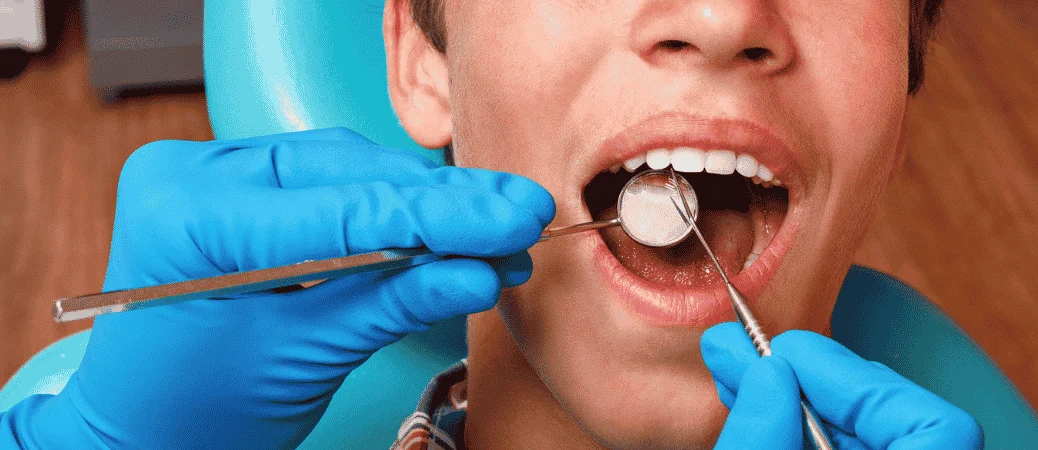
Your first appointment is mostly about gathering information: pictures of your jawbone, a close look at your gums and remaining teeth, and an honest talk about what you want your new smile to do for you.
By the end, you should know whether All-on-4 fits your case and what the treatment plan looks like.
Imaging, X-Rays, and a Detailed Oral Examination
An experienced dentist starts with imaging because bone is the deciding factor.
A panoramic x-ray gives a wide view of both jaws, while a 3D CBCT scan shows bone height, bone width, and the exact spots where nerves and sinuses sit.
That detail matters for implant planning. The surgeon needs to angle the two back implants to catch the densest bone available, and guesswork is not an option.
You will also get a hands-on exam. The dentist checks gum health, looks for infection, measures your remaining teeth, and reviews your medical history, since diagnostic imaging, health history, and an oral exam all feed into the same decision.
Reviewing Bite Forces and Treatment Goals
Next comes your bite. Four implants have to handle years of chewing, so your surgeon checks how your upper and lower teeth meet and whether you clench or grind at night.
Heavy bite forces are not a dealbreaker. They just change the plan, sometimes that means adding a fifth or sixth implant, choosing a stronger material, or making you a night guard.
This is also when you talk about what you actually want. Some candidacy visits include a frank discussion of your goals and expectations alongside the clinical findings, which helps you decide if fixed teeth are worth the surgery and cost in your situation.
Planning Temporary and Final Prosthetic Teeth
Most patients are surprised to learn there are two sets of prosthetic teeth involved in a full-arch restoration.
| Stage | What it is | Rough timing |
| Temporary bridge | Lighter, often acrylic, placed at or near the day of implant placement | Worn about 3–6 months |
| Final bridge | Custom zirconia or acrylic-titanium teeth made after healing | Fitted once implants fuse to bone |
During the evaluation, your surgeon and lab plan tooth shape, shade, and how much gum will show when you smile.
You will also talk about diet during healing. Soft foods protect the temporary bridge while your bone bonds to the implants.
Questions to Ask Your Oral Surgeon
Good ones to start with:
- Am I a candidate based on my scan? Ask to see your own images.
- How many implants do you recommend, and why?
- What sedation will I have during the implant procedure?
- What will my temporary teeth look and feel like?
- What is your implant success rate with cases like mine?
- What happens if one implant does not integrate?
- What is the total cost, including extractions, sedation, and the final bridge?
Ask for the treatment plan in writing, with a stage-by-stage timeline you can review at home.
Frequently Asked Questions
Bone loss, smoking, and uncontrolled health conditions come up in almost every conversation about All-on-4 candidacy, along with practical worries about eating, talking, and price.
Here are straight answers to the questions patients ask most.
Who is not a good candidate for All-on-4 dental implants?
The clearest reasons to wait or choose something else include active gum infection, uncontrolled diabetes, and current chemotherapy or radiation to the head and neck.
Each of these slows healing, which the implants need in order to bond with your bone.
Heavy grinding, active drug or alcohol misuse, and an unwillingness to keep up with cleaning can also work against you.
Age, by itself, is not on that list. Many people in their 70s and 80s do well, and disqualifying factors are assessed individually rather than by a simple checklist.
What are the potential disadvantages of All-on-4 implants?
The surgery is a real procedure, so expect some swelling, bruising, and soreness for a week or two.
You also wear a temporary bridge for several months while your bone heals, and that bridge asks you to stick to softer foods.
Other trade-offs to know about:
- All four implants support one bridge, so a failed implant affects the whole arch
- Cleaning under the bridge takes a water flosser and some practice
- The bridge may need repairs or replacement after many years, even though the implants can last much longer
- Severe upper jaw bone loss may push you toward zygomatic implants or grafting instead
Do I need enough jawbone to qualify for All-on-4 implants?
You need enough bone at the four planned implant sites, but probably less than you think.
The two back implants are placed at an angle so they can reach the denser bone in the front of the jaw and skip the thinner areas in the back.
That design is the whole reason All-on-4 exists. It often avoids the grafting that older implant methods required.
One important note: a flat 2D X-ray cannot measure bone in three dimensions. A CBCT scan can, so a “no” based on a panoramic image alone deserves a second look.
Can smokers get All-on-4 dental implants?
Yes, though smoking roughly doubles the risk of implant failure because it limits blood flow to the healing site. Most dentists will treat you and be honest with you about that risk.
Quitting before surgery and staying off cigarettes for at least two to three months afterward makes a real difference in how well the implants heal and settle in.
Is it difficult to speak or eat with All-on-4 implants?
Most people adjust within a few weeks. Because the bridge is anchored to implants instead of resting on your gums, it does not shift or click, and that steady fit supports clearer speech than a loose denture allows.
Eating follows a schedule. You start with soft foods while the implants integrate, then move back toward a normal diet once your dentist clears you and your final bridge is in place.
Some people notice a slight lisp or extra tongue awareness at first. Reading out loud for a few minutes a day usually clears it up quickly.
Are All-on-4 dental implants worth the cost?
That depends on what you are comparing it to. All-on-4 costs more upfront than a traditional denture, and prices vary by location, materials, and whether extractions are included.
The math often shifts when you count the alternative. Repeated crowns, root canals, extractions, and relines on failing teeth add up year after year, and they still may not solve the problem.
You also get benefits that are hard to price: a bite that holds steady, no adhesive, and less bone loss over time because the implants stimulate your jaw.
Ask your dentist for a written treatment plan and a payment or financing option so you can compare real numbers instead of estimates.